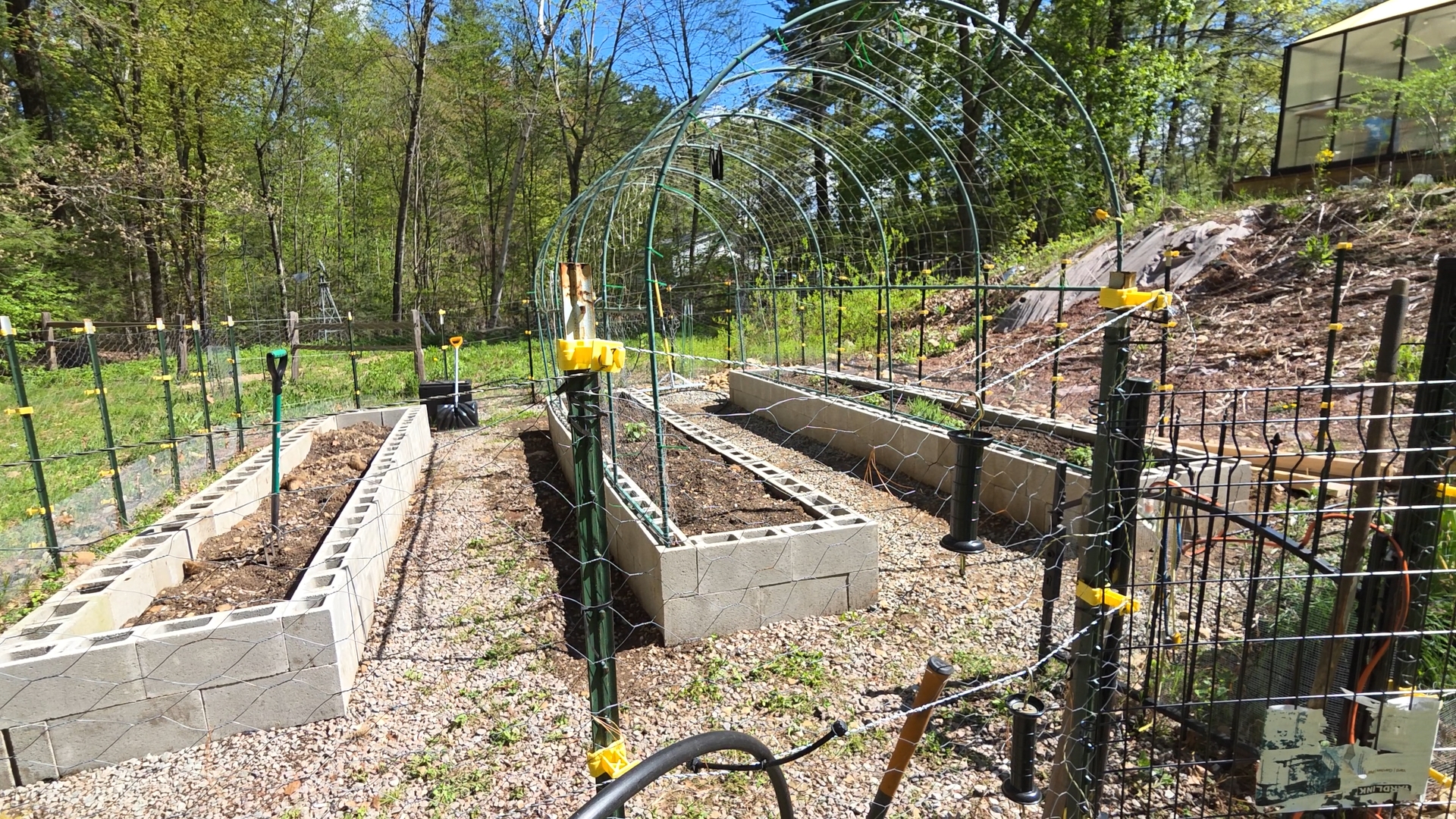
My wooden raised beds put up a good fight, but New England winters don't lose. This spring, I finally tore them out and rebuilt everything in concrete block — and I'm never going back.
Here's the thing about wood raised beds: they're great, right up until they're not. Lightweight, cheap, easy to throw together on a Saturday afternoon — and for a season or two, they look fantastic. But freeze-thaw is relentless up here. Moisture works its way into the boards, freezes, expands, and does it again the next week. A few winters of that and you've got bowed sides, split corners, and boards rotting from the inside out where you can't even see it coming. My beds hit that wall. So I pulled them, and rebuilt with something that isn't going anywhere.
This one's a full teardown-to-finished-bed episode — here's what I learned along the way.
Why Concrete Block Won
It outlasts everything. A properly stacked concrete block bed will outlive cedar, pine, composite — pick your lumber. We're talking decades, not seasons.
Zero mortar. Standard 8x8x16 blocks interlock and hold under their own weight — no mortar needed for raised bed use. That means the whole build is reversible. Change your mind about the layout next year? Pull it apart and reconfigure.
Freeze-thaw doesn't touch it. No rot, no warping, nothing for moisture to slowly destroy over a decade of New England winters.
It grows with you. Want another few inches of depth next season? Stack another course. Want to extend the bed ten feet? Add more block. Try doing that with a wooden frame.
The Numbers
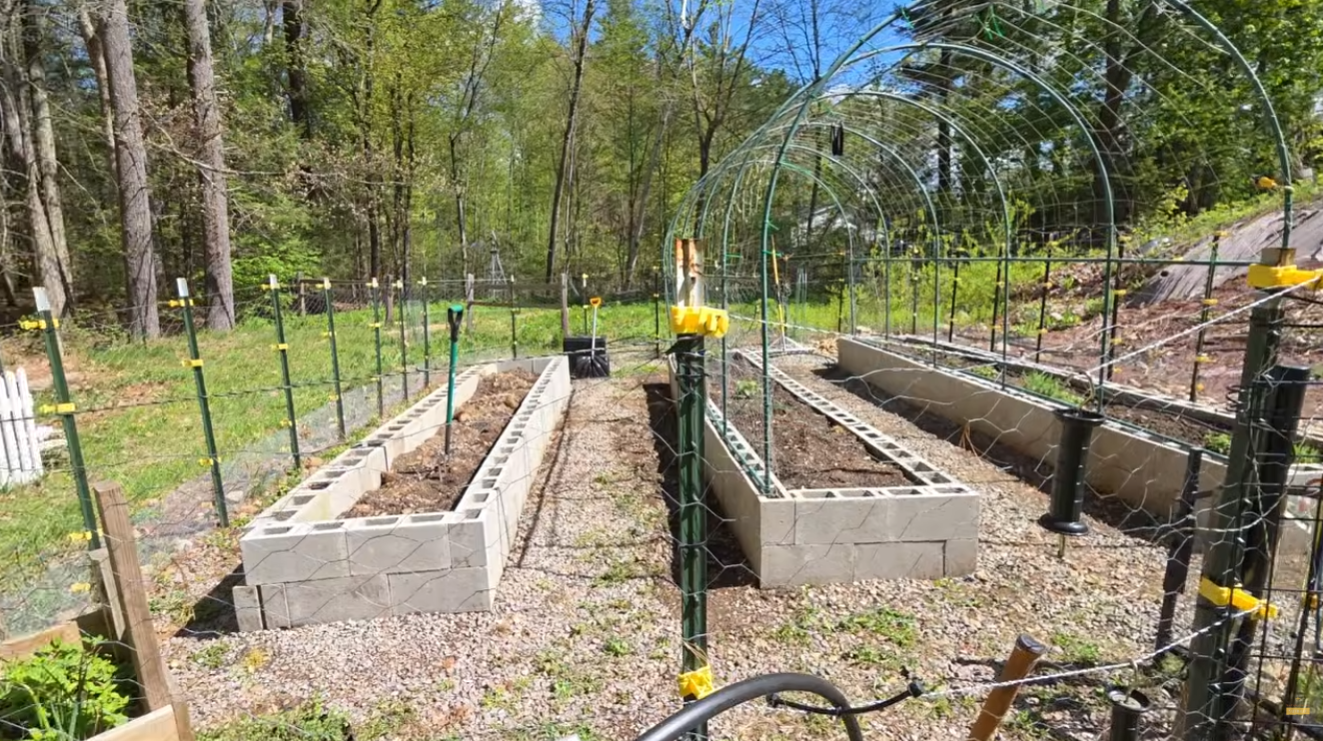
Three beds total: two outer beds at roughly 32" wide by 17' long, and a wider center bed at 48" wide by 17' long — all two courses high, standard 8x8x16 concrete block. Total block count landed around 170 blocks.
Pro tip: order extra. Blocks come off the pallet chipped or cracked more often than you'd think, and a mid-project hardware store run is a special kind of annoying.
The Build, Step by Step
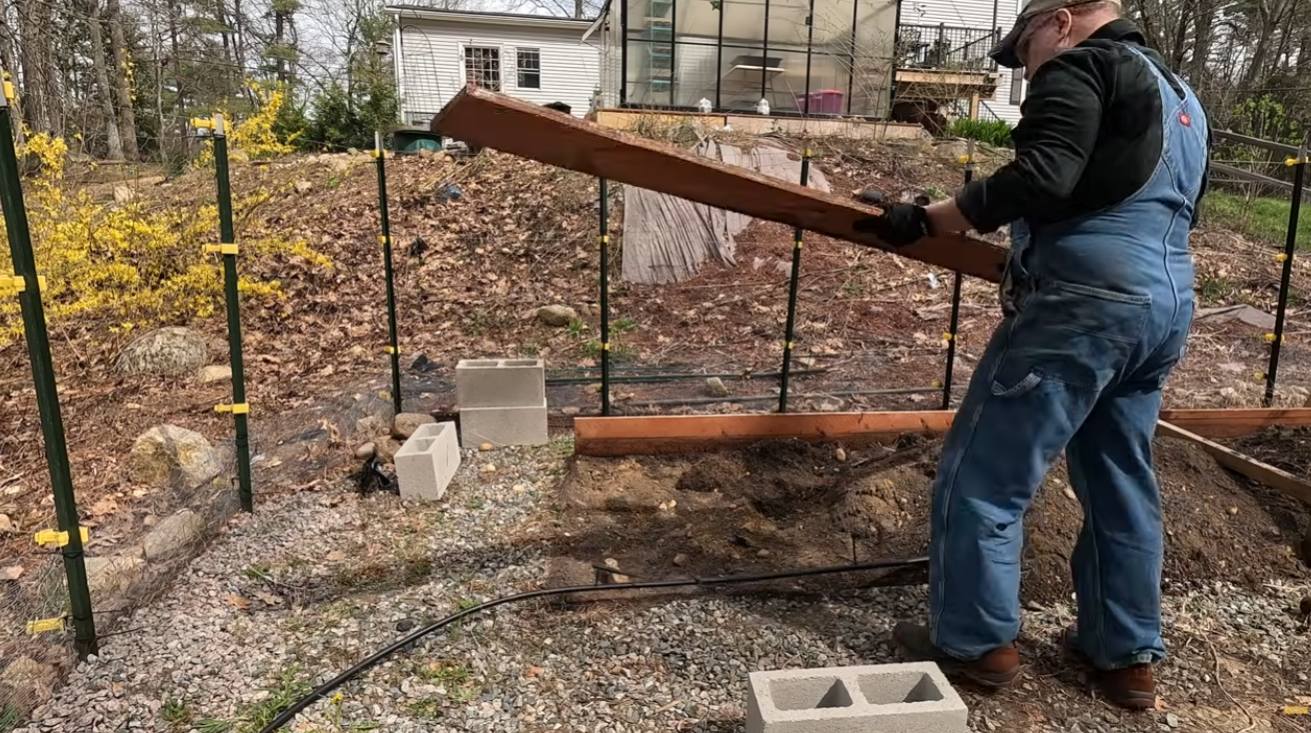
Step 1 — Rip Out the Old Beds. Pull the boards, clear the footprint, and brace yourself for whatever's been hiding underneath for the last decade. Save your soil — mine had years of built-up organic matter and became a solid head start on the fill for the new beds.
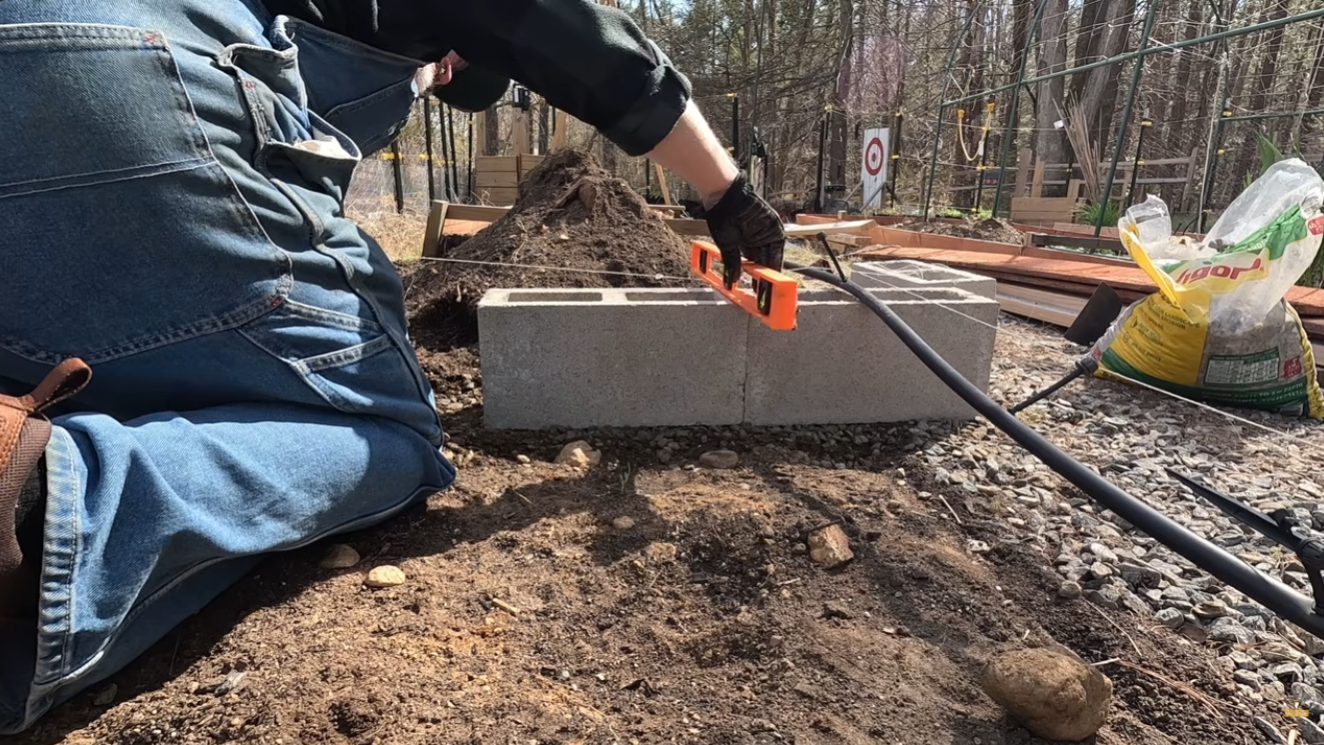
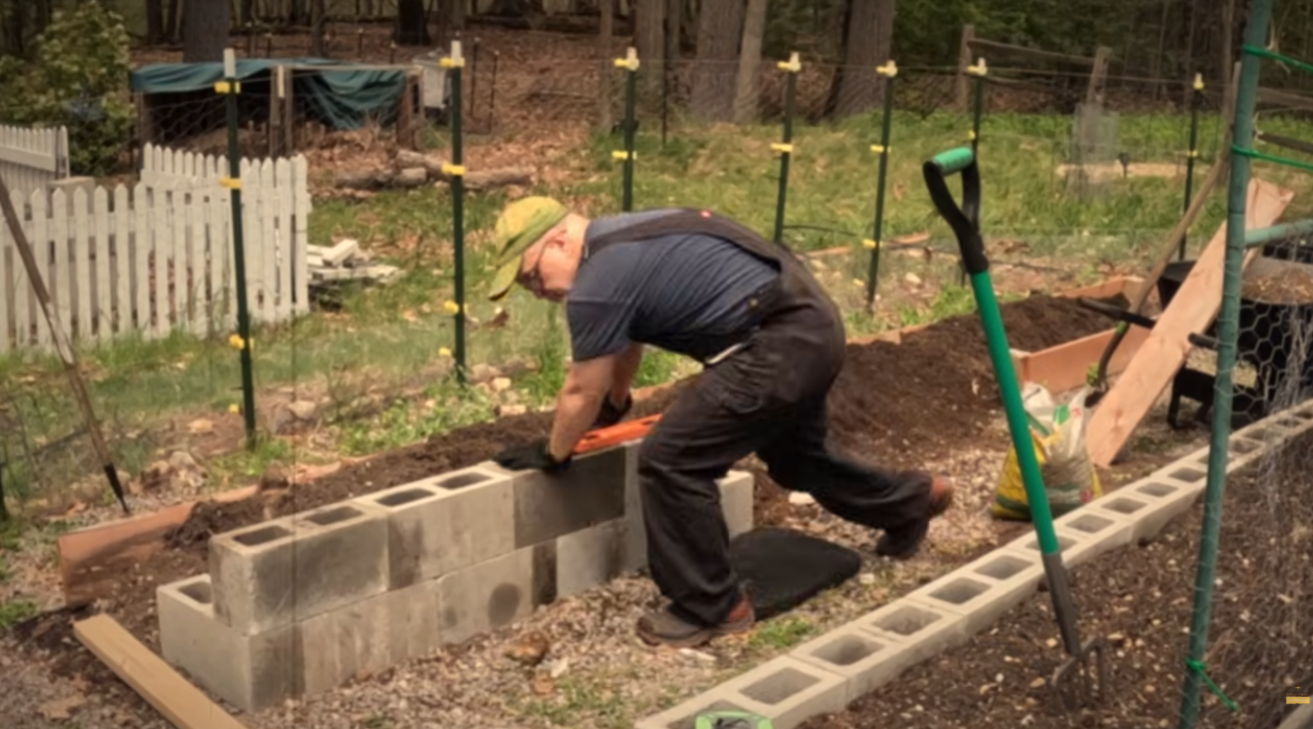
Step 2 — Get the First Course Dead Level. This is the step that matters most. Every course you stack afterward inherits whatever's wrong with the first one, so take the extra twenty minutes here. Dry-fit the whole first course before you commit to anything.
Step 3 — Stack and Offset the Second Course. Offset the joints like brickwork — each block should bridge the seam of the two beneath it. No mortar, no adhesive. Weight and interlock do all the holding.
Step 4 — Don't Do This Alone. At 30-35 pounds a block, 170 of them adds up fast. Aline was on this build with me start to finish, and I genuinely don't think I'd have made it through without her. Find your gardening partner. Your lower back will send a thank-you note.
Filling Three Beds
At this size, you're looking at roughly 211 cubic feet of soil across all three beds — not a small number. I reclaimed what I could from the old wooden beds and filled the rest from my compost piles. If your compost leans on pine-based material, test your pH before you plant anything. Garden lime is cheap insurance if you come back acidic.
Not sure how much soil your own beds need? I put together a soil calculator that does the cubic-foot math for you — just plug in your bed dimensions.
Was It Worth It?
If your wood beds are starting to bow and split, concrete block is worth the trouble. The upfront labor is real — there's no way around moving that much weight — but you do it once, and then you're done. No annual repairs, no rot, no boards pulling loose from the corner posts three years from now.
Watch the full build here: We Built This Garden (on Concrete Blocks)
For more New England gardening guides, tips, and resources, visit newenglandharvester.com.
Whatever you're growing this season — grow it well.
Comments
Loading comments…