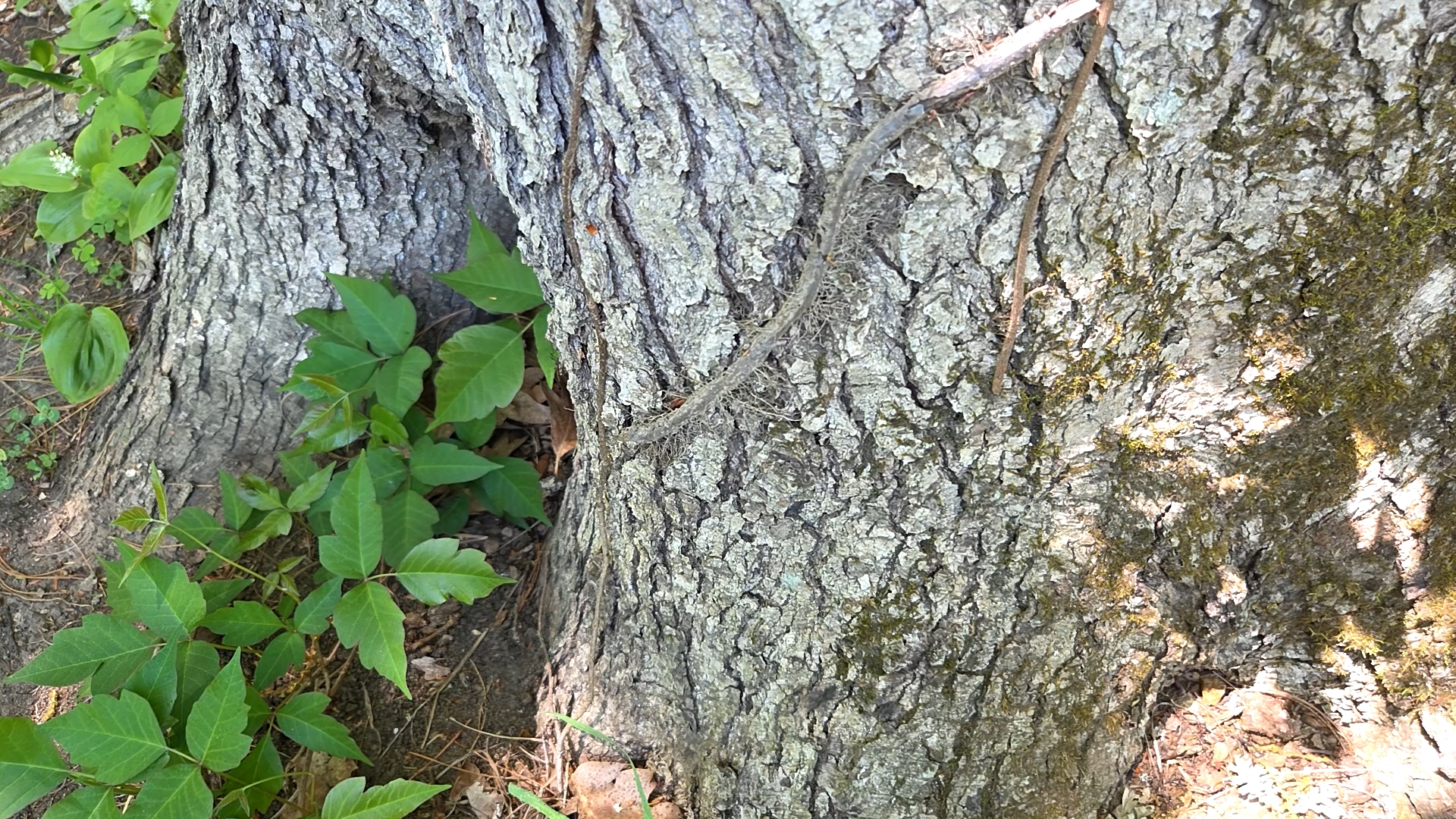
Poison ivy sends thousands of New Englanders to the emergency room every year — and most of them never saw it coming. They brushed past it on a trail. Their dog ran through a patch. They grabbed a tool that hadn't been cleaned since last season. The oil transferred, they didn't feel a thing, and two days later they were miserable.
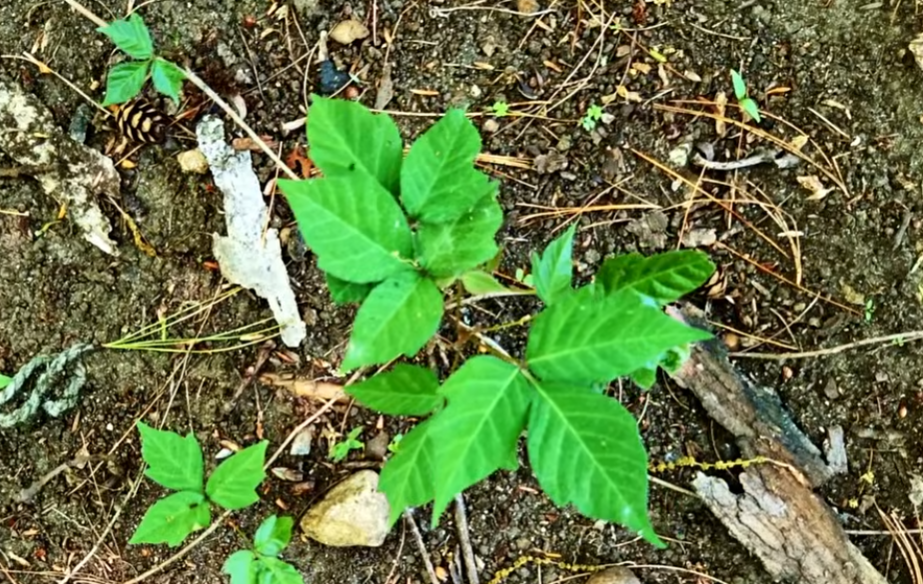
This guide covers everything you need to know — how to identify it in every season, why it's so dangerous, what to do if you've already been exposed, what removal methods actually work, and how to gear up so you come out clean.
Quick Reference — If You Think You Just Touched It
Rinse the area in cold water within 10–30 minutes if at all possible — urushiol starts binding to skin fast, and cold water (not hot) slows that down. Wash with a grease-cutting dish soap or a urushiol-specific cleanser like Tecnu. Wash under your nails. Then wash anything else that touched the plant — clothes, tools, gloves, and your dog if they ran through it — since the oil transfers freely for weeks.
How to Identify Poison Ivy in Every Season
Leaves of three, let it be. You've heard that. The problem is poison ivy looks different depending on the season, the amount of sun it gets, and its growth stage. Most people who think they can identify it reliably — can't.
- Spring: New leaves emerge shiny and reddish. Easy to mistake for something harmless or even attractive.
- Summer: Green, waxy, and unremarkable. It blends into everything.
- Fall: Brilliant red and orange — genuinely beautiful. People walk right up to it.
- Winter: No leaves at all, but the bare stems and white berry clusters are still fully toxic.
Also watch for the hairy rope vine. When poison ivy climbs a tree it sends out fibrous aerial rootlets that grip the bark and look almost hairy. This is one of the most reliable ways to identify the plant even in winter when the leaves are gone. Hairy rope, don't be a dope.
Plants Commonly Confused with Poison Ivy
The leaves of three rule has exceptions that look convincing. Wild raspberry and blackberry both have three leaflets with serrated edges. Virginia creeper usually has five leaflets but young growth sometimes shows three. Boston ivy has a three-lobe single leaf that can fool you at a glance. Box elder seedlings have three leaflets and are completely harmless.
The distinguishing feature of poison ivy is the middle leaflet, which has a slightly longer stem called a petiolule. The leaf edges are variable — they can be smooth, slightly toothed, or lobed. There is no single reliable visual rule. You learn this plant by studying it, not by memorizing one rhyme.
The Science of Urushiol — Why It's So Dangerous
Poison ivy produces an oil called urushiol, and it's present in every part of the plant — leaves, stems, roots, and berries — in every season including winter. The amount that fits on the head of a pin is enough to cause a reaction in 500 people.
Urushiol is also remarkably stable. It has been found on preserved herbarium specimens over a hundred years old and still capable of causing a reaction. It transfers to your tools, your gloves, your pet's fur, and your clothing. Your dog can run through a patch, come inside completely fine, and give it to you when you pet them.
The reaction itself is an allergic response — your immune system recognizing urushiol and attacking. The first exposure often produces little or no reaction, which gives people false confidence. Subsequent exposures produce stronger reactions. Some people who were immune for years develop severe reactions later in life. Symptoms include intense itching, redness, swelling, and fluid-filled blisters. Severe reactions involving the face or eyes require medical attention.
Already Exposed? Here's What Actually Helps
If you're reading this because you already have a rash, the single most useful thing to know is a timeline: urushiol typically binds to skin within 10 to 30 minutes. Wash it off before then and you may avoid a reaction entirely. Past that window, the oil is bonded and washing won't stop the rash — but it will keep you from spreading it to other parts of your body or to other people.
- Cold water, not hot. Hot water opens pores and can drive urushiol deeper. Cold water with a grease-cutting dish soap or a urushiol-specific wash (Tecnu, Zanfel) is the standard advice.
- You are not contagious once the oil is off. The rash itself, the fluid in blisters, and scratching cannot spread poison ivy to another person or another part of your body. What spreads it is leftover urushiol still on your hands, clothes, or under your nails days later — which is why it can seem to "spread" over several days even though it isn't actually contagious.
- Wash everything that touched the plant. Clothing, boots, tool handles, leashes, and pet fur can all carry active urushiol for days to weeks if untouched. Machine wash clothes separately in hot water; wipe tools and boots down with rubbing alcohol or soapy water.
- Over-the-counter relief: hydrocortisone cream, calamine lotion, and oral antihistamines (for itching, not for stopping the reaction) are the standard first-line options. Cool oatmeal baths and cold compresses help with comfort.
- When to actually see a doctor: the rash covers a large portion of your body, it's on your face or genitals, blisters look infected (increasing pain, pus, warmth, fever), or you have any difficulty breathing — that last one can mean you inhaled urushiol, which is a medical emergency, not a rash problem.
What NOT to Do — Ever
- Never burn it. Burning releases urushiol into the smoke. Inhaling that smoke delivers the oil directly into your lungs. People have been hospitalized. People have died.
- Never weed-whack it. A string trimmer turns poison ivy into a fine mist of urushiol that goes on your skin, in your eyes, and in your lungs.
- Don't mow over it. Same problem — you're spreading it and making it airborne.
- Don't compost it. Urushiol persists in dead plant material. You'll create a concentrated pile of it that you'll eventually spread around your garden.
Bag it in heavy contractor bags and dispose of it as yard waste. That's it.
Home Remedies — What Works and What Doesn't
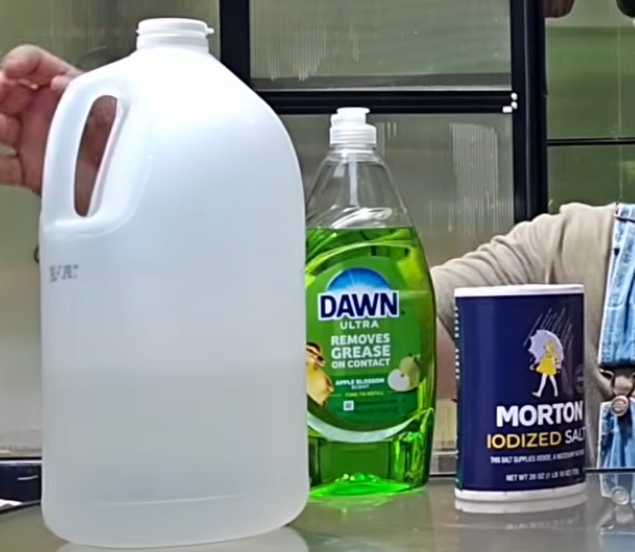
A lot of people try these before reaching for a herbicide. Here's an honest assessment:
- Boiling water: Kills top growth effectively in small contained areas. Won't reach a deep root system and kills everything else in that zone.
- White or horticultural vinegar: Applied full strength on a sunny day, it burns leaf tissue. Works on leaves, does not kill roots.
- Salt and dish soap solution: Desiccates the plant. Top growth only, not the roots.
- Smothering with black plastic or cardboard: Actually works reasonably well on an established patch, but you're committing to a full growing season minimum. The dead plant material underneath still has urushiol on it when you remove it.
The honest assessment: all of these approaches can set a plant back and kill top growth. None of them reliably kill an established root system. They work best on young plants caught early.
Store-Bought Herbicides — Glyphosate vs Triclopyr
The two active ingredients you'll see on most poison ivy herbicide labels are glyphosate (found in some Roundup products) and triclopyr (found in products like Brush-B-Gon and Ortho Poison Ivy Killer).
Glyphosate is a broad-spectrum herbicide that kills most vegetation on contact. It works on poison ivy but typically requires multiple applications because the root system is so extensive. Triclopyr is what many professionals prefer specifically for woody vines and brush. It targets broadleaf plants more selectively, but multiple applications are still needed.
Timing matters. Late spring — when the plant has fully leafed out and is actively photosynthesizing — is the most effective window. The plant is pulling nutrients down to the root system and will carry the herbicide with it. Fall just before leaf drop is also effective for the same reason.
We tested Ortho Ground Clear Poison Ivy Killer, which claims visible results within an hour. The time-lapse showed it delivered. But here's what's actually happening: it's not the triclopyr causing that rapid visible response — triclopyr kills roots but that takes days. What you're seeing is pelargonic acid destroying the leaf tissue rapidly, cutting off the plant's ability to absorb light and air. Strip the leaves first, and the triclopyr can do a more thorough job on what's underneath.
The important caveat: even when these sprays work, dead poison ivy is still dangerous. Urushiol doesn't go anywhere just because the plant is dead. In fact it's worse — the leaves are brown and withered and much harder to spot.
Manual Removal — The Only Real Solution
Chemical or otherwise, there is no single-application solution. Poison ivy has an extensive root system that extends far beyond what you can see. Treat it once, the top growth dies, and it looks like you've won. Six weeks later it's back. This is a multi-season commitment. The goal is simply to exhaust the plant until it gives up.
Manual removal — pulling it out by the roots — remains the most effective long-term approach, and how you gear up is everything.
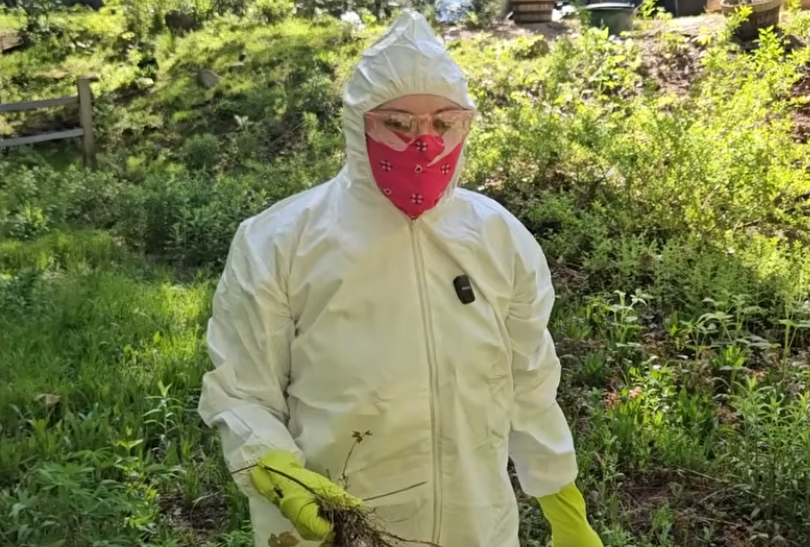
How to Gear Up for Poison Ivy Removal
- Wear a full disposable coverall (Tyvek-style bunny suit). Expect it to rip — that's fine, it's disposable.
- Cover your legs completely. Tuck pants into socks.
- Use DIY wrist covers cut from old compression socks to bridge the gap between gloves and sleeves.
- Double glove with thick waterproof gloves. If the outer glove rips, the inner glove protects you.
- Cover your face. Not just for protection — it's a physical reminder not to touch your face while your hands are contaminated.
- Use paper tape (not scotch or duct tape) to secure face coverings and glasses so you never need to adjust them mid-work.
- Wrap tool handles in plastic so handles stay uncontaminated. Cut and discard when done.
- Set up your decontamination station before you go in — not after.
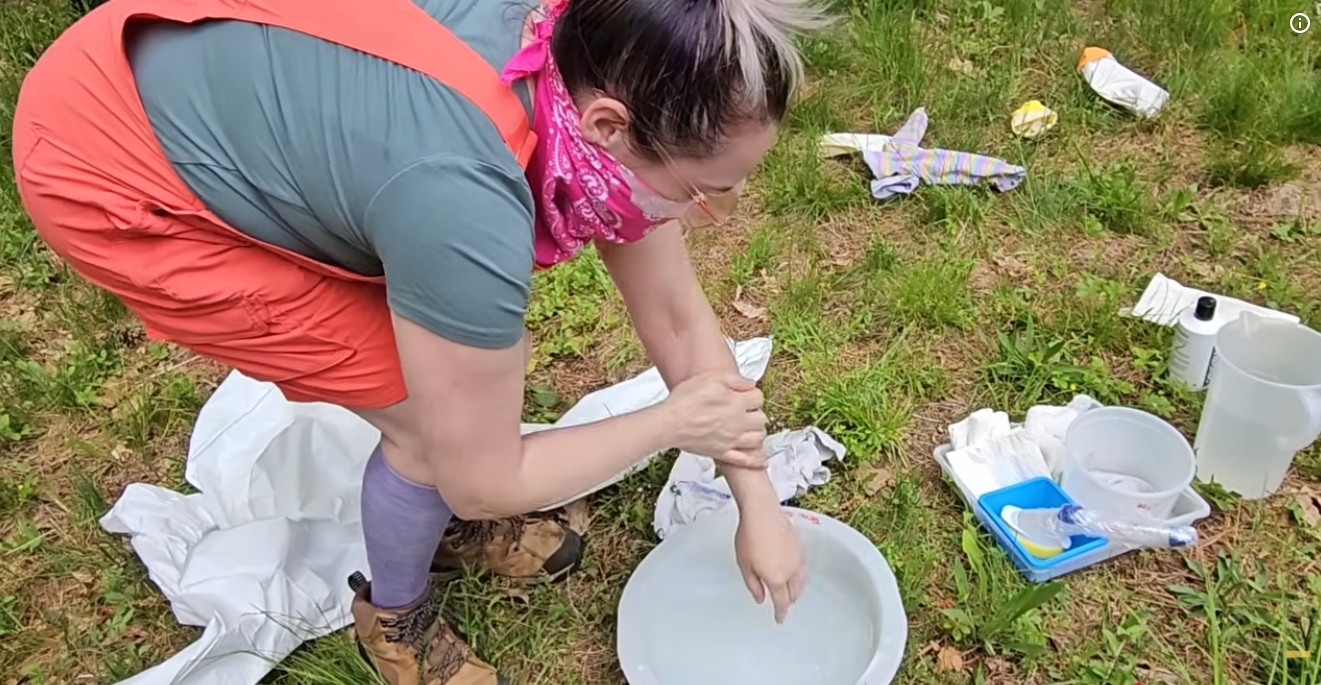
The Decontamination Process
Remove outer gloves first — they're the most contaminated. Peel them inside-out and discard. Use your cleaner inner gloves to begin removing your suit. Unzip carefully, keeping hands away from your face. Remove the suit from the inside out.
Wash hands in cold water with Tecnu soap, which is specifically formulated to break down urushiol. Dish soap — the kind that cuts grease — works in a pinch. Cold water only. Hot water opens your pores and can drive the oil deeper into the skin.
Remove your face covering last, with clean hands. Scrub your shoes before going inside. Wash your hands again after removing your shoes indoors.
The Honest Reality of Poison Ivy on a New England Property
On a wooded property, you may never eliminate poison ivy entirely — and that's okay. Poison ivy is actually a native plant and part of the New England ecosystem. Those white berries are a critical winter food source for dozens of bird species. The birds eat them with zero reaction and spread the seeds across your entire property. That's why it keeps coming back.
The goal isn't eradication. It's keeping it out of the spaces where you actually live and move. With the right identification skills, the right gear, and the right expectations — you can absolutely do that.
It's not evil. It just doesn't belong where you're walking barefoot.
Frequently Asked Questions
Is poison ivy contagious once you have the rash?
No. The rash, the blister fluid, and scratching don't spread it to yourself or anyone else. Only leftover urushiol oil on skin, clothing, or objects spreads it — which is why it can look like it's "spreading" over several days even though each new patch is really just a delayed reaction or fresh contact with contaminated surfaces.
Can you get poison ivy in the winter with no leaves?
Yes. Every part of the plant contains urushiol year-round, including bare winter stems, roots, and the aerial rootlets on climbing vines. Cutting or handling "dead-looking" vines in winter is a common way people get exposed without realizing what they touched.
Does soap and water really stop a reaction?
Only if you wash within roughly 10–30 minutes of contact, before urushiol fully binds to your skin. After that window, washing won't stop the rash that's already forming, but it still matters — it removes oil that could otherwise spread to other body parts, other people, or surfaces.
Are animals immune to poison ivy?
Most pets and wildlife don't react to urushiol the way humans do, which is exactly what makes them dangerous carriers — a dog can run straight through a patch, show zero symptoms, and transfer the oil to you the moment you pet them.
Can poison ivy smoke really hurt you?
Yes, seriously. Burning vaporizes urushiol into the smoke, and inhaling it can inflame the lungs and airway — a reaction that's far more dangerous than a skin rash and has sent people to the hospital. Never burn poison ivy, even mixed in with other brush.
Watch the full episode on the New England Harvester YouTube channel to see the live herbicide test, Aline's complete gear-up demonstration, and the full decontamination walkthrough.
Comments
Loading comments…