

Why They Show Up
Lawn mushrooms are the fungal fruiting bodies of a network — called mycelium — that lives largely unseen underground or in decaying organic matter year-round. A damp stretch after rain, combined with the right temperature, is exactly when that underlying network sends fruiting bodies up above ground to release spores. Their sudden appearance overnight isn't a sign anything is wrong with your lawn or soil; it's just the fungus doing what it does when conditions line up. Mulched beds, buried tree roots, old stumps, and thatch buildup are all common fuel sources, which is why mushrooms often cluster in the same few spots year after year.
The Ones Worth Real Caution
Certain small brown lawn mushrooms, particularly in the Galerina genus and some related "little brown mushroom" groups, carry genuinely dangerous liver toxins even in relatively small amounts, and they're common enough in New England lawns and mulched areas to be a real, practical concern for dogs that graze on whatever they find outside during a walk or backyard time. These are exactly the kind of unremarkable-looking brown mushrooms that don't stand out visually as dangerous, which is part of what makes them a genuine risk rather than an obvious one. Galerina marginata in particular contains the same family of amatoxins found in the death cap (Amanita phalloides) — a mushroom more associated with wooded areas but occasionally found at lawn edges near trees, especially oaks and pines.
Separately, and far more commonly encountered, is Chlorophyllum molybdites — sometimes called the green-spored parasol or, less politely, the "vomiter" mushroom. It's actually the single most common cause of mushroom poisoning cases in North America, not because it's especially toxic, but because it's a large, showy, common lawn mushroom that closely resembles edible shaggy manes and true parasols. It won't cause liver failure the way amatoxins do, but it causes severe, sometimes dangerous vomiting and diarrhea, and a dog that eats a substantial amount can become seriously dehydrated fast.
What Most Lawn Mushrooms Actually Are
The majority of what pops up in a typical residential lawn is far less dangerous than the worst-case species, causing at most mild stomach upset — vomiting or diarrhea — if a curious dog eats one. But since visual identification of mushrooms down to species level is genuinely difficult even for experienced foragers with years of practice, treating all unidentified lawn mushrooms as suspect around pets is simply the safer practical default rather than trying to sort harmless from dangerous by eye in your own yard.
A Rough Field Guide to What You'll Actually See
Knowing the general shapes helps you talk to a vet quickly if something gets eaten, even if you can't pin down an exact species. A few common lawn types, roughly in order of how often New England yards see them:
Puffballs — round, white-to-tan balls with no visible cap or gills, often the size of a golf ball to a baseball. Young ones are solid white inside; as they age they turn brown and powdery, releasing a visible puff of spores if stepped on or disturbed. Mostly harmless if eaten in small amounts, though large quantities can still cause GI upset.

Shaggy manes / inky caps — tall, cylindrical, white caps covered in shaggy scales, often growing in clusters right after mowing or along disturbed soil. They're a well-regarded edible when young and white, but they age fast — within hours the cap starts turning pink, then black, and eventually dissolves into an inky black liquid. This is also the shape most often confused with the toxic green-spored parasol above, which is the real reason to be cautious with this whole group rather than assuming "shaggy and white" always means safe.

Fairy ring mushrooms — tan to light brown, bell-shaped caps with a tough, slightly leathery texture, growing in a distinctive circle or arc across the lawn. The ring itself often shows up as a band of darker green or dead grass before the mushrooms even appear. Generally low-risk but still worth keeping pets away from during a flush.
Little brown mushrooms (LBMs) — the catch-all, unglamorous category that includes both harmless species and the genuinely dangerous Galerina group described above. Small, brown, forgettable-looking caps on thin stems, often growing in small clusters in mulch or damp grass. Because this category can't be reliably sorted by eye, it's the one where "just remove it, don't try to identify it" applies most strongly.
Stinkhorns — less common but hard to miss once you smell them. A slimy, foul-smelling tip (the smell attracts flies, which help spread the spores) sitting atop a pale, spongy stalk. Dogs are rarely tempted by the smell, but the occasional determined dog will still investigate.
Signs of Trouble If a Pet Does Eat One
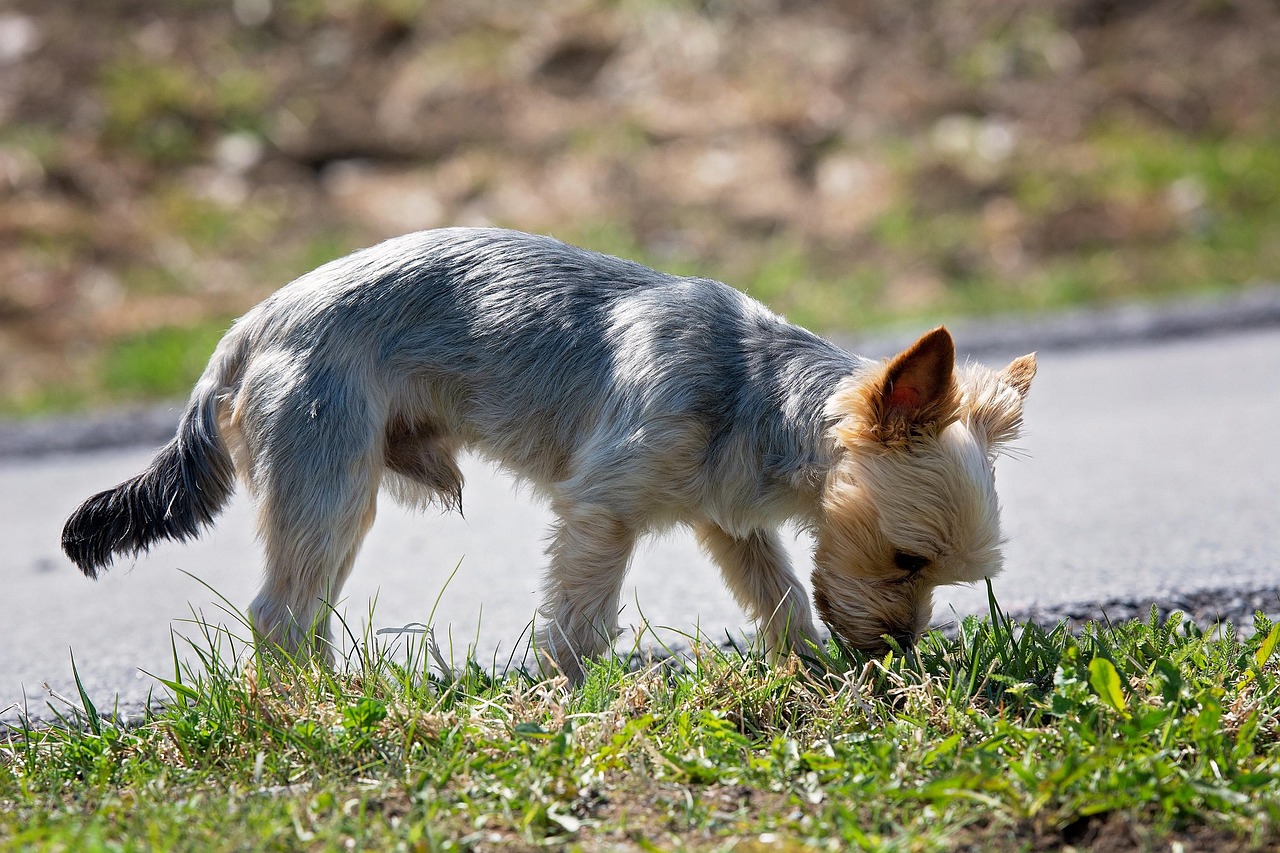
If a dog does eat a wild mushroom and shows symptoms like vomiting, lethargy, drooling, or disorientation, it's worth treating that as an urgent situation rather than a wait-and-see one, since some of the genuinely toxic species have a delayed symptom onset that can make things look falsely reassuring in the first few hours even when real damage is already underway internally.
This delayed pattern is exactly what makes amatoxin-containing mushrooms like Galerina so dangerous. The classic timeline looks like this: vomiting and diarrhea appear roughly 6 to 12 hours after ingestion, driven by the toxin's initial effect on the gut. Then — and this is the genuinely dangerous part — the dog often appears to recover over the next day or so, sometimes looking almost completely normal for 24 to 48 hours. That apparent recovery is not the toxin leaving the body; it's the toxin quietly attacking the liver in the background. By day three to five, liver failure can set in, often too late for treatment to fully reverse the damage. A pet that seems fine the morning after eating a mushroom hasn't necessarily dodged anything.
What To Do If You Suspect Poisoning
Don't wait to see whether symptoms develop, and don't wait for a specific symptom to "confirm" it's serious — by the time obvious symptoms show up with the dangerous species, valuable treatment time has already passed. Instead:
Photograph the mushroom in place before removing it, from multiple angles including the underside if possible, and take a whole specimen (cap, stem, and base) if you can safely collect one. Wrap it in a paper bag or damp paper towel — not plastic, which speeds decomposition and can obscure identifying features. This single step gives a vet or poison control genuinely useful information rather than a vague description.
Call a vet or a pet poison hotline immediately rather than waiting for symptoms. The ASPCA Animal Poison Control Center (888-426-4435) and the Pet Poison Helpline (855-764-7661) both operate 24/7 and can help assess risk based on species, amount, and your pet's size — both charge a consultation fee, but it's a small cost against a genuine emergency.
Don't induce vomiting on your own unless a vet specifically tells you to and walks you through it. Some substances are more dangerous coming back up, and timing matters more than people expect.
Note the details — roughly how much was eaten, when, and any symptoms so far, even if they seem minor. This context genuinely changes how urgently a vet responds.
Reducing the Risk Going Forward
You can't eliminate mycelium living in your soil, but a few habits meaningfully cut down how often pets encounter fruiting mushrooms. Do a quick sweep of the yard before letting pets out unsupervised after a rain, especially in areas with mulch, wood chips, or decaying stumps nearby — those are the spots mushrooms return to again and again. When you do remove mushrooms, bag them for the trash rather than tossing them in a compost pile, since spores can survive and simply reappear later. Mowing regularly and improving drainage in consistently damp spots also reduces how often conditions line up for a big flush in the first place.
The Bottom Line
Don't try to identify lawn mushrooms as definitively safe on sight, no matter how unremarkable they look. Do a quick sweep and remove them before letting pets out after a rain, especially in areas with mulch or decaying wood nearby, and if a dog does eat one, contact a vet promptly rather than waiting to see what happens. The mushrooms that matter most are rarely the dramatic, obviously-a-toadstool ones — they're the small, forgettable brown ones nobody thinks twice about.
Comments
Loading comments…