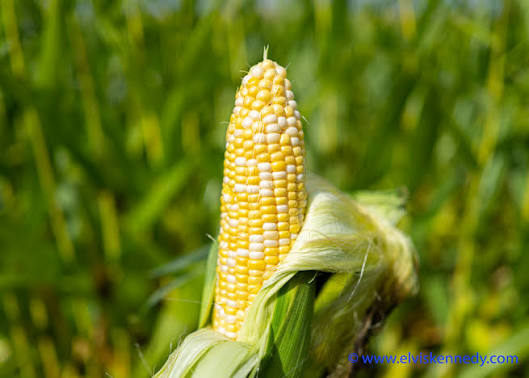
Can You Actually Grow Corn in New England?
Short answer: yes, absolutely. But corn is less forgiving than most vegetables, and New England throws a specific set of challenges at it — late frosts, cool soil in spring, humid summers that invite disease and pests, and a season that ends faster than you'd like. The gardeners who succeed with corn up here aren't lucky. They've just learned a handful of things that make all the difference.

This guide covers everything from variety selection to harvest timing, with specifics for New England's climate throughout. Whether you're growing in southern Connecticut or northern Vermont, the same core principles apply — you just adjust the timing.
Understanding What Corn Needs
Before we get into the how, it helps to understand what corn is actually asking for. Sweet corn is a warm-season crop that needs:
- Soil temperature of at least 60°F to germinate reliably — ideally 65–70°F for modern supersweet varieties
- Full sun — at least 8 hours per day, no exceptions
- Consistent moisture, especially during tasseling and ear development
- Space — corn is wind-pollinated and needs to be planted in blocks, not rows
- Heavy feeding — corn is one of the hungriest crops in the garden
New England can deliver all of these, but not all at once and not without some planning. The short season means you need to be strategic about variety choice and planting date. The cool springs mean soil temperature matters more here than almost anywhere else.
Choosing the Right Variety
This is where most New England corn growers either win or lose before they even plant a seed. Corn varieties vary significantly in their days-to-maturity, cold tolerance, and suitability for humid northeastern conditions.
Early-Season Varieties (65–75 days) — Your Best Bet in New England
Earlivee — One of the oldest reliable early-season corns. Germinates in cooler soil than most varieties, making it excellent for New England's unpredictable spring. Traditional sugary (su) type with that old-fashioned corn flavor many gardeners grew up with.
Sundance — A classic early yellow corn with good cold soil tolerance and a rich, sweet flavor. Widely grown in New England for decades.
Lancelot — A bicolor (yellow and white) sugary enhanced (se) variety that matures in about 73 days and performs extremely well in New England conditions.
Bodacious — A supersweet (sh2) yellow corn that consistently tops taste tests. Needs warmer soil to germinate but is worth the patience. Around 75 days.
Peaches and Cream — A beloved bicolor sugary enhanced variety that New England gardeners have grown for generations. Sweet, tender, and reliable at 70–80 days depending on conditions.
Mid-Season Varieties (76–85 days) — Feasible in Southern New England
Silver Queen — The iconic white sweet corn, but at 92 days it's really only reliable south of Boston. Worth trying in a warm year with a black plastic mulch trick (more on that below).
Incredible — A sugary enhanced yellow corn at about 85 days with excellent disease resistance and outstanding flavor. A strong performer for southern NH, MA, and CT growers.
A Note on Corn Types: su, se, and sh2
You'll see these designations on seed packets and it's worth understanding them:
- su (standard sugary) — Traditional sweet corn. Germinates best in cooler soil, converts sugars to starch faster after harvest. Eat same-day if possible. The most cold-tolerant group.
- se (sugary enhanced) — Sweeter than su, holds its sweetness longer after picking. Still reasonably cold-tolerant. The sweet spot for most New England home gardeners.
- sh2 (supersweet) — Very sweet, very long shelf life, but needs warm soil (65°F minimum, 70°F preferred) to germinate. Tricky in New England without warming the soil first. Must be isolated from other corn types to avoid cross-pollination that ruins the sweetness.
For most New England gardeners, se varieties are the best balance of flavor, cold tolerance, and holding ability.
When to Plant: New England Timing Guide
Planting too early is the most common corn mistake in our region. Cold, wet soil causes seed rot, poor germination, and weak seedlings that never fully recover. Patience is not just a virtue here — it's agronomically necessary.
- Zone 5 (southern CT, parts of MA): Direct sow after May 10–15, once soil hits 60°F
- Zone 6 (coastal MA, RI, CT): Direct sow after May 1–10
- Zone 5b (central MA, southern NH and VT): Direct sow mid-May, check soil temp
- Zone 4–5a (northern NH, VT, ME): Direct sow late May, consider warming soil with black plastic first
Use a soil thermometer — not the calendar — as your final guide. Push a probe 2 inches into the soil in the morning and check the reading. That's the number that matters.
Succession Planting
Plant a second block of corn 2–3 weeks after your first planting to extend your harvest window. In New England's short season, you can usually fit two successions — sometimes three in the south. Don't plant a third succession too late or it'll get caught by frost before maturity.
Soil Preparation: Corn Is Hungry
Corn is a heavy nitrogen feeder and it doesn't apologize for it. Preparing your soil well before planting makes everything downstream easier.
Work your bed to a depth of at least 12 inches — corn roots go deep and they need loose, well-draining soil to do it. Incorporate 2–4 inches of finished compost into the top 6 inches. If you have access to aged manure, even better.
For a pre-plant fertility boost, work in a balanced organic fertilizer (something like a 5-5-5 or 10-10-10) at the package rate. Then plan to side-dress with a nitrogen-heavy fertilizer (blood meal, fish meal, or composted chicken manure) when the plants are about knee-high — this is called the "side-dress" feeding and it's critical for good ear development.
Target soil pH of 6.0–6.8. If you haven't limed your garden recently and you're in New England (where soils naturally trend acidic), a lime application the previous fall is good practice.
Planting: Blocks, Not Rows
This is non-negotiable. Corn is wind-pollinated — the tassels at the top of the plant shed pollen that needs to land on the silks emerging from each developing ear. If you plant corn in a single long row, most of the pollen blows sideways and misses the silks entirely. The result is poorly filled ears with missing kernels.
Plant in blocks of at least 4 rows wide, ideally more. A 4x4 block (16 plants) is a minimum. A 4x6 or 4x8 block is better. The more plants in the block, the better the pollination and the fuller your ears.
Spacing: Plant seeds 1 inch deep, 4–6 inches apart in rows spaced 30–36 inches apart. Once seedlings are 4–6 inches tall, thin to one plant every 9–12 inches. Yes, it's hard to pull healthy plants, but crowded corn underperforms dramatically.
Warming the Soil with Black Plastic
If you're in a colder zone or want to get a jump on the season, lay black plastic mulch over your prepared bed 2–3 weeks before your target planting date. Black plastic absorbs heat and can raise soil temperature by 5–10°F — enough to make a real difference in germination speed and early growth. Cut X-shaped slits to plant through and leave the plastic in place all season. It also suppresses weeds, which is a bonus with corn's wide spacing.
Watering: Consistent Is the Key Word
Corn needs about 1 inch of water per week, and it needs it consistently. The two most critical periods are:
- Tasseling and silking — when the tassels emerge at the top and the silks emerge from the ears. Moisture stress during this 1–2 week window directly causes incomplete pollination and poorly filled ears.
- Ear fill — the 2–3 weeks after pollination when kernels are actively developing. Drought stress now causes shrunken, starchy kernels.
Water deeply at the base of the plants. Avoid overhead irrigation during tasseling if you can — wet tassels can clump and shed pollen poorly. Drip irrigation or soaker hoses are ideal for corn.
Fertilizing Through the Season
Beyond your pre-plant feeding, corn benefits from two additional applications:
- When plants are knee-high (about 18 inches): Side-dress with blood meal, fish emulsion, or composted chicken manure along the row. This nitrogen push drives the rapid vertical growth phase.
- When tassels begin to emerge: A second side-dress or foliar feed with fish emulsion supports kernel development. Don't overdo nitrogen at this stage — too much late nitrogen can actually reduce sweetness.
Pests and Problems in New England
Corn Earworm (Helicoverpa zea)
The most common corn pest in New England. The caterpillar enters through the tip of the ear and feeds downward through the kernels. Infestations are worse in late-season plantings when moth populations peak in late summer.
Controls: Apply a few drops of mineral oil to the silks 3–5 days after they emerge (when they begin to brown at the tips). The oil suffocates newly hatched larvae before they can bore into the ear. You can also use Bt (Bacillus thuringiensis) sprayed on silks. Row covers until tasseling can help in severe years.
European Corn Borer (Ostrinia nubilalis)
Larvae tunnel into stalks and ears, causing breakage and damaged kernels. Look for small round entry holes and frass (sawdust-like debris) on the stalk.
Controls: Bt sprayed into the whorl when plants are young and when silks first emerge. Trichogramma wasps (available commercially) parasitize the eggs.
Raccoons
In New England, this is often the most devastating corn pest of all — and the one least often discussed in seed catalogs. Raccoons have an uncanny ability to identify exactly when your corn reaches peak ripeness and will strip an entire patch overnight.
Controls: Electric fence is the most reliable deterrent. Run two strands — one at 6 inches and one at 12 inches above the ground. Bait the fence with peanut butter on the first night so they touch it and learn to stay away. A single night of training usually keeps them out for the season.
Smut (Ustilago maydis)
A fungal disease that causes grayish-white galls to form on ears and tassels. It's more common in hot, dry years following mechanical injury to plants. Remove and dispose of galls before they turn black and release spores. Do not compost infected material.
Harvesting at Peak Sweetness
Timing the harvest is everything with sweet corn, and the window is shorter than most people expect — especially with traditional sugary (su) types that convert sugar to starch quickly after reaching peak ripeness.
Signs of readiness:
- Silks have turned brown and dry — but the ear still feels full and firm when you squeeze it through the husk
- The ear is plump all the way to the tip
- It's been approximately the number of days-to-maturity listed on the seed packet since planting (in ideal conditions)
- The classic test: peel back the husk slightly and pierce a kernel with your thumbnail. If the liquid is milky, harvest now. Clear liquid means it's not ready. Thick, doughy liquid means you've waited too long.
From silk emergence to harvest is typically 17–24 days depending on temperature — warmer weather speeds it up. Mark the date silks appear on your planting notes and start checking at day 17.
Harvest in the Morning
Sugar content is highest in the early morning when the plant is cool. Harvest before the heat of the day and get it into the kitchen (or the cooler) immediately. The old saying goes: put the water on before you go to the garden. It's not far wrong.
The Three Sisters: A New England Tradition
If you want to grow corn in a way that builds soil rather than depleting it, consider the Three Sisters planting method used by Indigenous peoples throughout the Northeast for thousands of years. Plant corn, beans, and squash together in a traditional guild:
- Corn provides the vertical structure for beans to climb
- Beans fix atmospheric nitrogen, feeding the corn and squash
- Squash spreads low along the ground, shading out weeds and retaining soil moisture
It's a genuinely elegant system that works — and it's a piece of New England agricultural history worth carrying forward.
Quick Reference: New England Corn Calendar
- April: Prepare beds, add compost, apply lime if needed. Lay black plastic to warm soil in cooler zones.
- Early May: Direct sow in Zone 6 (coastal areas) once soil hits 60°F
- Mid-May: Direct sow in Zone 5b–6 (central MA, southern NH/VT)
- Late May: Direct sow in Zone 4–5a (northern NH, VT, ME)
- 2–3 weeks after first planting: Succession planting
- When plants are knee-high: First side-dress with nitrogen fertilizer
- When tassels emerge: Watch moisture closely, apply mineral oil to silks for earworm control, second fertilizer application
- 17–24 days after silking: Begin checking for harvest readiness
- After harvest: Cut stalks and compost, or till in to return organic matter to the soil
Final Thoughts
Growing corn in New England isn't difficult — but it does demand respect. Respect for soil temperature, for block planting, for consistent water at the right moments, and for the very short window between perfect and past-peak at harvest. Get those things right and you'll be standing in your garden in August biting into an ear that's still warm from the sun, wondering why you ever bought corn at a store.
There is no comparison. Grow your own.
Whatever you're growing — grow it well.
Comments
Loading comments…