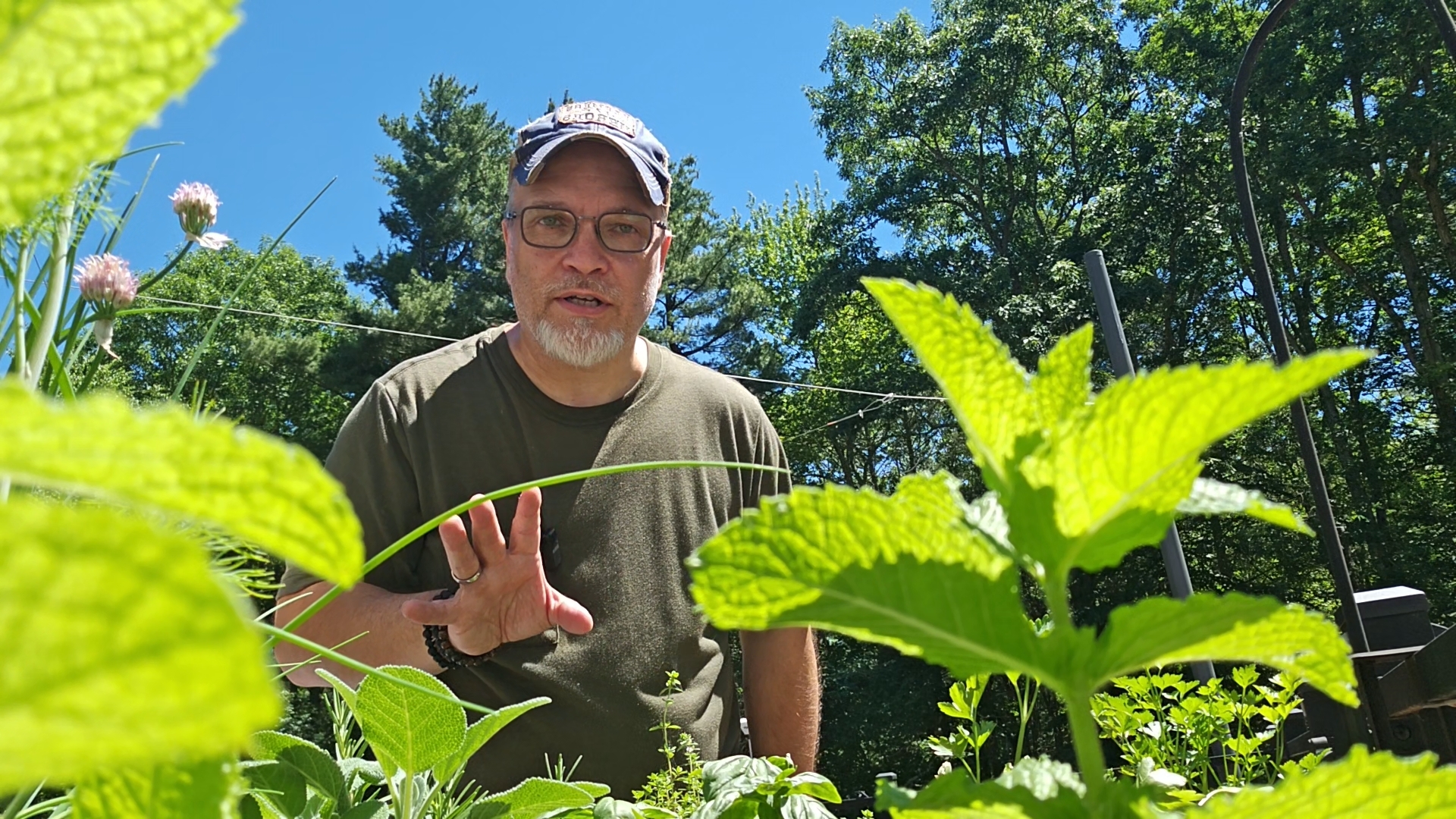
If you've ever had mint take over a raised bed or watched bittersweet swallow a tree, you've probably used the word "invasive." But that word means something very specific to your state's Department of Agriculture — and it may not mean what you think.

Two Definitions of Invasive
When an agricultural agency classifies a plant as invasive, they're making a regulatory determination. In New England, plants on the prohibited invasive species list are illegal to collect, transport, sell, or propagate. These are plants that have escaped cultivation, spread without human help, and are actively displacing native species at a landscape scale. Getting on that list typically takes documented evidence: tracked spread beyond where it was planted, measurable displacement of native plant communities, and often years of observation before a state agency will act.
For a gardener, invasive usually means something simpler: this plant is spreading where I didn't ask it to. It's crowding out what I planted. It's hard to control. Sometimes those two definitions overlap completely. Sometimes they don't overlap at all.
Officially Invasive Plants in New England
These plants are on the prohibited list for good reason, and each one calls for a different removal approach:
- Multiflora Rose — Introduced for erosion control and livestock fencing, it produces up to 500,000 seeds per plant per year and forms dense thickets that eliminate native understory plants. Cutting alone won't finish it; the root crown resprouts readily. Cut close to the ground and treat the fresh stump with an appropriate herbicide immediately, since that's the point the plant is most vulnerable. Repeated mowing over several seasons can suppress it without full eradication if herbicide isn't an option.
- Oriental Bittersweet — A climbing vine that girdles trees, topples them with canopy weight, and spreads via bird-dispersed berries. The roots are distinctively orange. Cut the vine at ground level and again at shoulder height so the two ends can't reconnect, then treat the lower cut stump. Vines already high in the canopy are often safer left to decay naturally rather than pulled down, since yanking a mature vine can bring branches or entire dead limbs with it.
- Japanese Knotweed — Hollow bamboo-like stems, heart-shaped leaves, root systems that go 10 feet deep and 60 feet laterally. It breaks through pavement and foundations. This is the one where the obvious move backfires: cutting it down without follow-up treatment often triggers even more vigorous regrowth from the rhizomes rather than killing it. The realistic homeowner approach is cutting it back in early summer, letting it regrow to a few feet, then treating the fresh foliage with herbicide in late summer or early fall when the plant is naturally pulling resources down into the roots. Full eradication commonly takes several seasons of repeated treatment, and New Hampshire's Department of Agriculture publishes its own detailed control guide if you're dealing with a real infestation.
- Japanese Barberry — Linked to increased deer tick populations; research from the Connecticut Agricultural Experiment Station found significantly higher tick density in barberry thickets compared to cleared areas, since the dense, humid growth favors both ticks and the small rodents that host them. Small plants can be hand-pulled when soil is moist enough to bring the whole root system with them. Larger, established shrubs need cutting at the base followed by stump treatment, or repeated seasonal cutting to exhaust the root reserves if you're avoiding herbicide.
- Purple Loosestrife — A wetland invader producing up to 2 million seeds per year. Still sold as an ornamental in some places despite being prohibited. Hand-pulling works well for small, isolated plants, especially before flowering. If you can't remove a plant before it flowers, cutting off the flower spikes before they set seed at least stops that year's spread while you plan full removal.
- Burning Bush — Popular for fall color, but birds spread it into natural areas. Like most woody invasive shrubs, it resprouts readily from a cut stump, so removal follows the same cut-and-treat approach as multiflora rose. Replace it with highbush blueberry or native viburnums for similar fall color without the ecological impact.
- Autumn Olive — Another erosion-control introduction gone wrong. It fixes nitrogen in the soil, tolerates poor conditions most native shrubs can't, and produces heavy crops of berries that birds spread widely. The silvery undersides of its leaves are the easiest field mark. Same cut-stump herbicide approach works here, and because it resprouts aggressively, a single cutting without stump treatment usually makes the shrub bushier rather than gone.
Garden-Aggressive But Not Prohibited
Some plants will run roughshod through your garden without appearing on any official list.
Mint spreads by underground runners called rhizomes and will cross beds, find its way under edging, and colonize a large area in just a few seasons. The solution is containment from the start — plant it in a container, or sink the container into the ground with the rim above soil level to stop the runners.
Running bamboo belongs in this category too, and it surprises people who assume anything this aggressive must be regulated. Most ornamental running bamboo species aren't on New England's prohibited lists, even though a single planting can send rhizomes 10 feet or more underground in a season and pop up through a neighbor's lawn. If you want bamboo's look without the spread, clumping bamboo varieties stay where you put them; running types genuinely need a physical rhizome barrier sunk well below the surface, not just vigilance.
Wild raspberry and blackberry are native plants with real ecological value. Birds, small mammals, bears, and native pollinators all depend on them. But along a garden edge, their tip-rooting canes and thorny thickets can move into your beds fast. Management here isn't eradication — it's consistent cutting and keeping them where you want them.
Poison ivy is also native, ecologically valuable, and not on any invasive species list. The problem is entirely the human response to urushiol. Protective gear is non-negotiable for removal — long sleeves, gloves, eye protection — and because birds keep reseeding it, management is ongoing.
Know What You're Managing
The approach to removing multiflora rose is different from managing wild raspberry along a fence line. One is a prohibited species doing ecological damage. The other is a native plant that belongs here — it just needs to stay in its lane.
Know your plants, know why they're there, and manage them accordingly. When in doubt, your local cooperative extension office can help with identification and removal guidance specific to your region.
Comments
Loading comments…