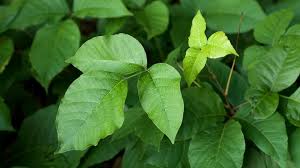
Glyphosate and triclopyr are two of the most commonly reached-for herbicides when people go to war with poison ivy. They're widely available, relatively cheap, and there's no shortage of product labels and forum threads insisting a good spray-down will take care of the problem. And to be fair, they do work in a narrow sense: sprayed foliage typically browns, wilts, and dies back within a week or two.

But "the leaves died" and "the poison ivy problem is solved" are two very different outcomes. Here's where these herbicides fall short, and why relying on them alone can leave you with a more hidden version of the same problem.
The Vines and Roots Often Survive
Poison ivy is a woody, deeply rooted perennial, and a single foliar spray frequently isn't enough to kill the whole plant. The roots and the thick, hairy vines climbing up trees or fences can survive even when the leaves die off completely. What you're left with is a dead-looking plant that still has a living root system underneath and a still-standing vine that's now bare instead of leafy.
That matters because a leafless poison ivy vine is much harder to identify at a glance than one covered in its telltale three-leaflet growth. You've removed the visual warning sign while leaving the hazard itself intact.
Urushiol Doesn't Break Down Quickly
The oily compound responsible for poison ivy rashes, urushiol, is remarkably stable. It doesn't evaporate or degrade on any convenient timeline. Urushiol on dead vines, old roots, tools, or even old firewood can remain capable of causing a reaction for years, and there are documented cases of it staying active on herbarium specimens for over a century.
So when a spray kills the visible foliage but leaves woody vines standing, those vines aren't just an eyesore. They're still coated in urushiol and still capable of causing a reaction if someone brushes against them, handles them, or tries to pull them down without protection, even long after the leaves are gone.
These Herbicides Aren't Selective
Both glyphosate and triclopyr affect a broad range of plants, not just poison ivy. Glyphosate is non-selective and will damage or kill most green plant tissue it contacts, including grass, groundcover, and any desirable plants growing nearby or intertwined with the vine. Triclopyr is somewhat more selective toward broadleaf plants over grasses, but it will still readily damage other broadleaf shrubs, trees, and ornamentals if it contacts them, whether through overspray, drift, or root uptake in some formulations.
Since poison ivy loves to grow up through hedges, along tree lines, and tangled into other plants, it's genuinely difficult to spray it without also hitting something you didn't intend to kill.
The Glyphosate Cancer Debate
You'll also see glyphosate come up in a different context: as a possible human health risk. In 2015, the International Agency for Research on Cancer classified glyphosate as "probably carcinogenic to humans," a finding that's been a major point of ongoing litigation against Bayer/Monsanto. Other regulatory bodies, including the EPA and European Food Safety Authority, have reached different conclusions, generally finding that glyphosate is unlikely to pose a cancer risk to humans at typical exposure levels.
This is genuinely a contested area, with real disagreement among scientists and regulators, and it's not something a blog post can settle. But it's worth knowing that the debate exists if you're weighing whether to use it around your home, especially in areas where kids or pets spend time.
So What Actually Works?
Herbicides can be part of an effective poison ivy strategy, but they work best combined with physical removal, not as a standalone fix:
- Cut vines first, then apply herbicide directly to the freshly cut stem, which delivers it straight into the plant's system rather than relying on leaf absorption
- Follow up over multiple seasons, since a single treatment rarely kills an established root system outright
- Dig out roots where practical, especially in areas near foot traffic, gardens, or play areas
- Treat dead vines and cut material as still hazardous, and handle, bag, and dispose of them with the same gloves-and-long-sleeves precautions you'd use on a living plant
The Bottom Line
Glyphosate and triclopyr can kill the leaves you can see, but the vine, the roots, and the urushiol coating it all frequently outlast the spray. That leaves you with a plant that looks handled but isn't, one that's actually harder to identify and just as capable of giving you a rash months or years later. Combine any herbicide use with proper cutting, root removal, and careful disposal if you actually want the problem gone, not just out of sight.
Comments
Loading comments…