Why They're Suddenly Everywhere
Tomato hornworms are the larval stage of the Carolina sphinx moth, and in much of New England there's time for a second generation to hatch and mature before frost. Moths that emerged and laid eggs back in June produce caterpillars that do their damage in July; a second wave of eggs laid by that generation's moths hatches into the hornworms showing up now, right when tomato plants are loaded with fruit and have the most to lose.
Why They're So Easy to Miss
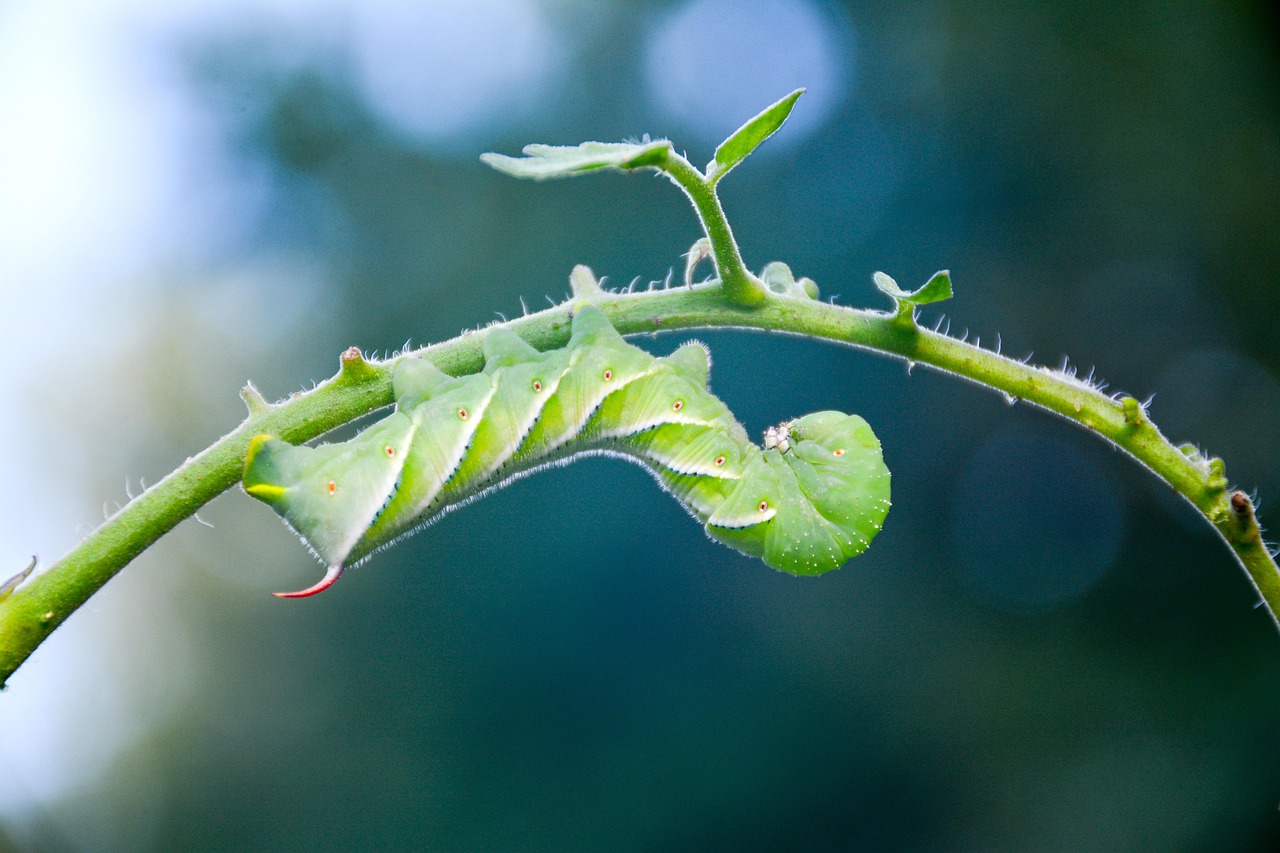
A fully grown hornworm can be 3 to 4 inches long, bright green with white diagonal stripes and a small horn-like projection at the tail end, and yet somehow still nearly invisible against tomato foliage. Their coloring and stripe pattern break up their outline almost perfectly against the plant, which is exactly why the first sign most gardeners notice isn't the caterpillar itself — it's the damage.
The Fast Way to Actually Find One
Look for the evidence first, then hunt from there. Dark green or black droppings (frass) on leaves or the ground beneath the plant are the single best clue, since they mark almost exactly where the caterpillar has been feeding recently. Stripped stems with leaves chewed down to bare ribs are the other giveaway. Once you've spotted frass or stripped stems, run your eyes up the stem directly above that spot, checking the undersides of nearby leaves — that's where hornworms tend to sit during the day. A blacklight after dark is a genuinely effective trick too, since hornworms fluoresce a pale blue-green under UV light, making them far easier to spot at night than by eye in daylight.
What to Do Once You Find One
Hand-picking is the most reliable control for a home garden — pluck the caterpillar off and drop it in soapy water, or relocate it well away from your tomatoes. One important exception: if you find a hornworm covered in small white, rice-like cocoons, leave it alone. Those are the cocoons of a parasitic braconid wasp that's already killed the caterpillar from the inside, and letting that wasp complete its cycle helps build up a natural population that controls hornworms for you in future seasons.
Encouraging the Natural Backup
Planting dill, fennel, or parsley near your tomatoes draws in the same parasitic wasps, giving your garden an ongoing defense that works even when you're not out there checking daily. Our Beneficial Insect Finder can point you toward more plants that pull in hornworm predators specifically.
Comments
Loading comments…