
Rain barrels get marketed like a simple, obvious upgrade, and the concept is simple. The math behind sizing one correctly is where most people guess wrong, usually underestimating by a wide margin how much water a modest roof section actually sheds during a normal storm.
The Conversion Number Isn't a Rule of Thumb, It's Exact
One inch of rain falling on one square foot of roof equals 0.623 gallons of water. That's not an approximation, it's straightforward geometry: a square foot of area times one inch of depth works out to a twelfth of a cubic foot, and a cubic foot of water holds 7.48 gallons. Multiply that out across a full roof section and the numbers get big fast.
Take an average 1,500 square foot single-story roof footprint, not unusual for a New England ranch or cape. A single one-inch rain event sheds roughly 934 gallons off that roof. A typical New England thunderstorm can drop half an inch to a full inch in under an hour. That's not a slow trickle a single barrel sips at over the course of a day, it's most of a barrel's capacity arriving before the storm even finishes.
A Standard Barrel Fills Faster Than People Expect
A modest 20 by 30 foot roof section collects somewhere around 370 gallons per inch of rain at typical collection efficiency. A standard 55-gallon rain barrel doesn't stand a chance against a real New England thunderstorm, and most of that collected water simply overflows straight past a single barrel and back onto the ground. This is exactly why serious rainwater setups link multiple barrels together with an overflow hose running barrel to barrel, or skip barrels entirely in favor of a single larger tote or cistern. If you're staying with barrels, plan the overflow path deliberately, into a rain garden or at least a good distance from the foundation, rather than letting it dump straight down next to the house every time the first barrel fills.
Real Collection Is Always Less Than the Theoretical Max
Splash-out, evaporation, gutter overflow during heavy storms, and any first-flush diverter sending the initial dirty runoff away from storage all reduce actual collection below the theoretical number. Somewhere around 85 percent efficiency is a reasonable working estimate for a typical home gutter setup, lower for older or debris-prone gutters.
If you're adding a first-flush diverter, the standard sizing rule of thumb is to divert roughly 10 gallons of runoff for every 1,000 square feet of roof area before any water reaches storage. That first flush is what carries pollen, roof grit, and whatever settled on the shingles since the last rain, so letting it bypass the barrel entirely keeps the stored water noticeably cleaner without much lost volume.
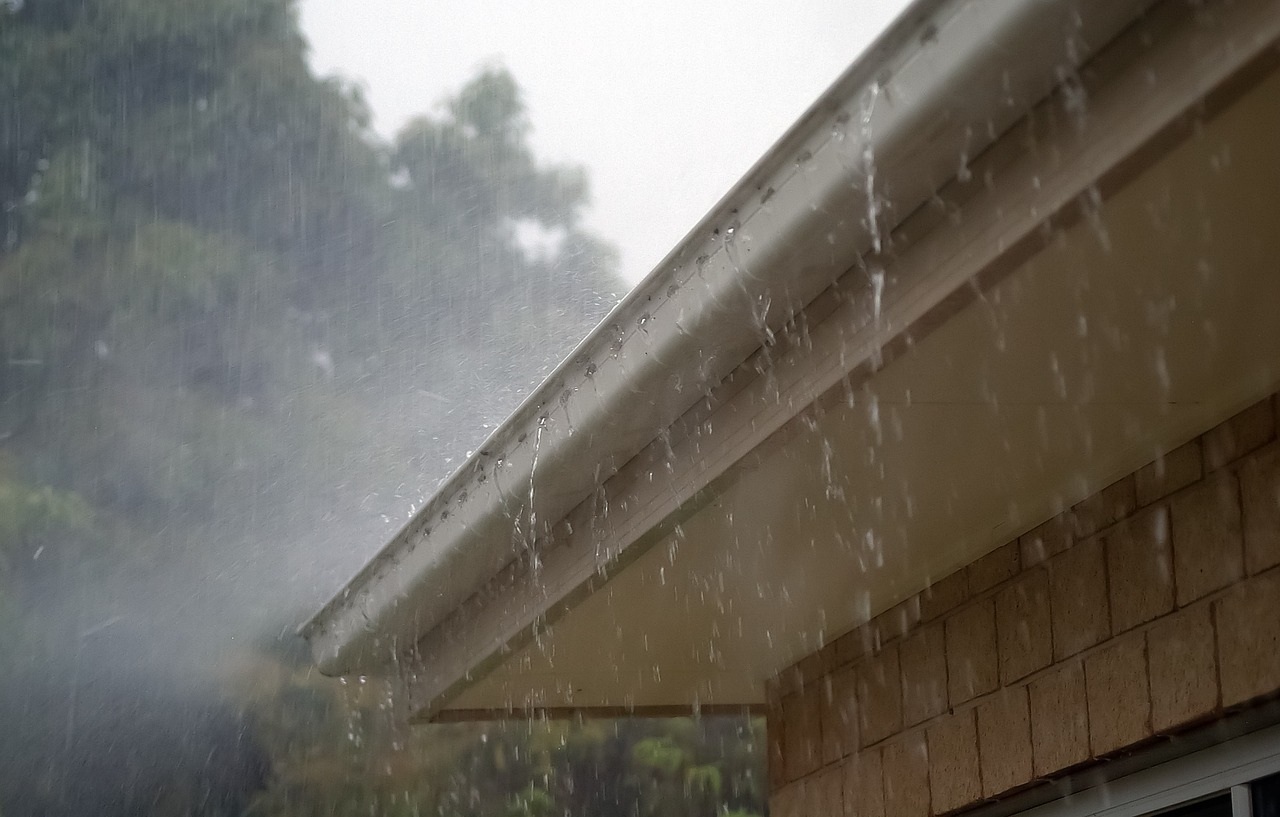
Roof Material Matters If You're Using It on Food Crops
Asphalt shingle runoff can carry small amounts of the same chemicals that give shingles their weatherproofing, though how much of a real concern that is depends heavily on what kind of asphalt shingle you have. The clearest, most consistent finding in the research is specifically about algae-resistant shingles: their copper-treated granules measurably leach copper into runoff. Plain asphalt shingles, by contrast, tested surprisingly close to a clean glass control panel in the most rigorous study on this to date, suggesting most of what older tests picked up was airborne residue settling on any roof rather than something coming from the shingle itself.
Either way, it's a reasonable habit to filter or let water settle before applying it directly to edible crops, and doubly worth doing if you know your roof uses algae-resistant shingles specifically.
One thing that isn't a concern here in New England: legality. All six New England states place zero restrictions on residential rain barrel collection for outdoor use, and New Hampshire's own Department of Environmental Services actively promotes it through the Soak Up the Rain program. That's a real relief if you've ever read about the water-rights restrictions some western states place on rainwater harvesting, none of that applies here.
I built a free rainwater collection calculator that takes your roof dimensions and rainfall amount and tells you exactly how many gallons you're collecting, with a realistic efficiency adjustment built in rather than the inflated theoretical maximum.
Whatever you're growing this season, grow it well.
Comments
Loading comments…