Something is eating your garden — and if you misidentify it, every treatment you try will either fail or make things worse. Here's how to identify and stop the 9 most destructive pests in New England vegetable gardens using organic methods.
How to Identify and Control Garden Pests in New England (Before They Destroy Your Garden)
Something is eating your garden — and if you misidentify it, every treatment you try will either fail or make things worse. Here's how to identify and stop the 9 most destructive pests in New England vegetable gardens using organic methods.
If you've ever walked out to your garden in the morning and found leaves stripped to the stem, seedlings cut off at the soil, or the inside of a squash stem hollowed out — you know the feeling. Something was out there while you slept. And the worst part is you have no idea what did it.
Misidentifying a garden pest is one of the most common and costly mistakes home gardeners make. The fix for aphids is completely different from the fix for squash vine borers. Spray the wrong thing and you'll wipe out your beneficial insects, waste money, and still have the problem.
This guide walks you through the 9 most common and destructive garden pests in New England — what they look like, what their damage looks like, and exactly what to do about each one using organic methods.
Before You Spray Anything
Not every insect in your garden is a problem. In fact, most of them aren't. Ladybugs, ground beetles, parasitic wasps, and lacewings are out there doing your pest control for free. The moment you reach for a spray bottle without identifying what you're dealing with, you risk wiping out your allies along with your enemies.
The rule is simple:
identify first, then decide if you even need to act. Most of the time, if you catch a problem early and you've got a healthy garden ecosystem going, nature handles it for you.
1. Squash Bugs
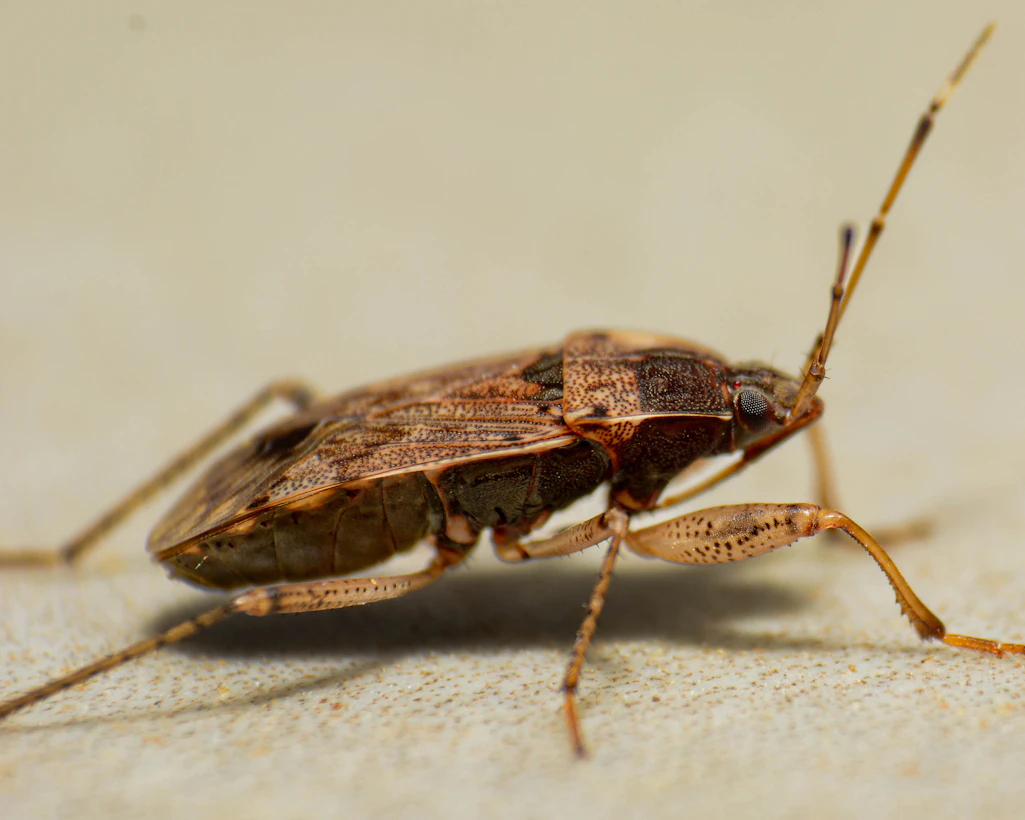
The squash bug is a flat, brownish-gray bug about 5/8 of an inch long, shaped almost like a shield. They're not flashy and they're easy to miss if you're not looking carefully. The eggs are clusters of small, bronze-colored ovals laid in neat rows on the undersides of leaves, usually where the veins meet. Nymphs start out green and gray and darken as they mature.
The damage squash bugs cause is wilting — but it's different from drought wilting. They pierce plant tissue and inject a toxin as they feed. Leaves yellow, then brown, then crisp up from the edges inward. In a bad infestation, entire vines can die.
What to do
Check the undersides of your leaves every few days. Hand-pick adults and nymphs into soapy water and crush egg clusters when you find them. Remove dead plant debris at the end of the season — squash bugs overwinter as adults in garden litter and emerge ready to go in spring.
2. Squash Vine Borers
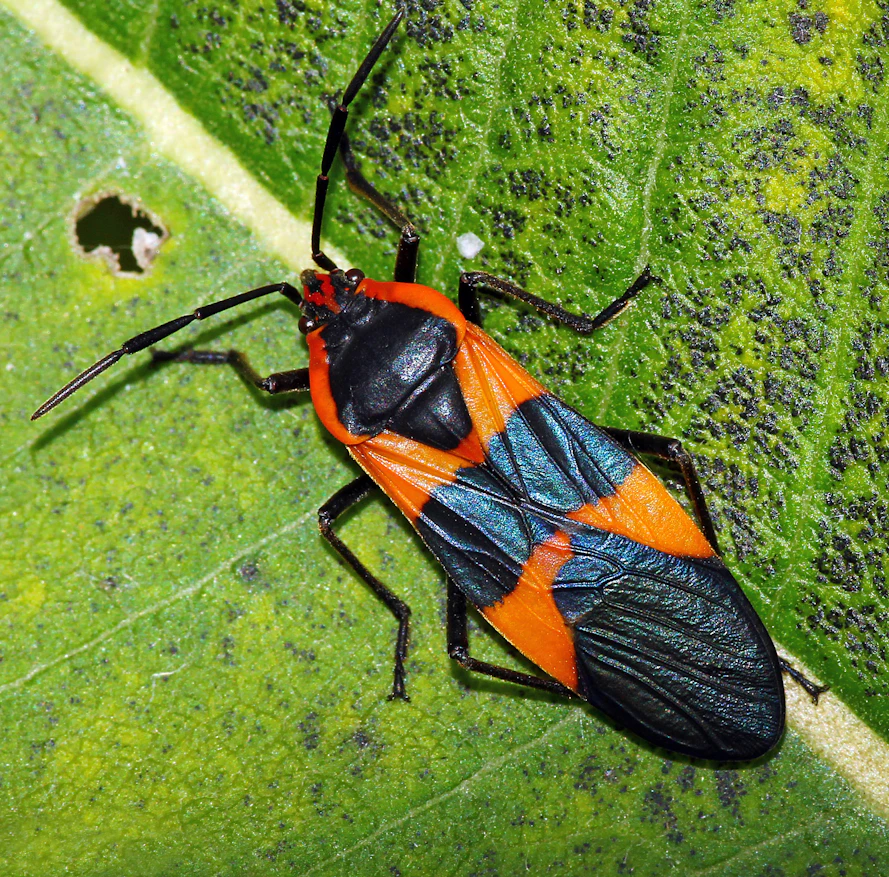
The squash vine borer is a moth that doesn't look like a moth. The adult is day-flying, orange and black, and mimics a wasp. You've probably seen them flying around your squash beds without knowing what they were. They're active in New England from roughly
late June through mid-August, though the window shifts year to year.
The females lay flat, reddish-brown eggs one at a time at the base of squash stems. The larvae bore directly into the stem and feed from the inside. The first sign is usually a healthy plant that suddenly wilts and collapses — not gradually, suddenly — and doesn't recover when you water it. You may also see wet sawdust-like frass at the base of the stem before collapse.
That's your early warning sign.
What to do
If the borer is already inside, slit the stem lengthwise with a sharp knife where you see the frass, remove the caterpillar, bury that section of stem under soil, and keep it watered. The stem can re-root above the wound. For prevention, use row covers before adults are flying. Some gardeners wrap the base of squash stems in aluminum foil to deter egg laying. Rotate your squash beds every year.
3. Japanese Beetles
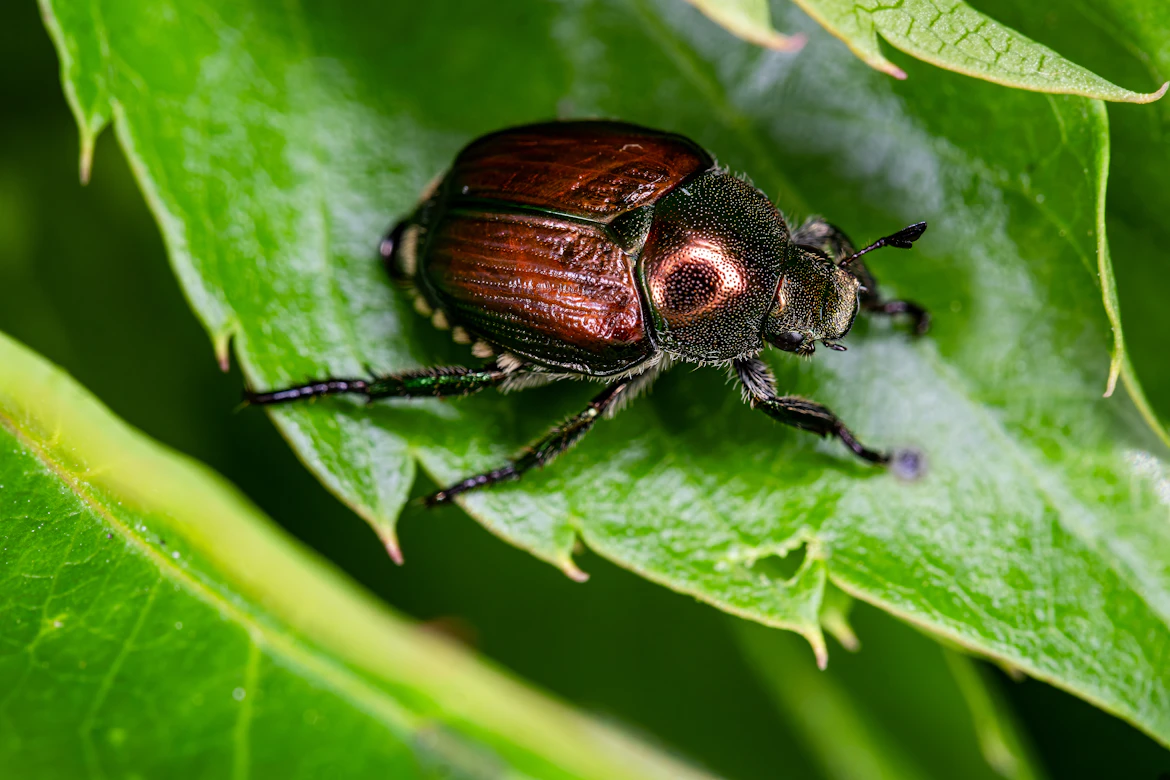
Japanese beetles show up in early July and will eat almost anything — roses, basil, beans, raspberries, grapes, fruit trees. The adults are about a half inch long with a metallic green head and thorax, copper-brown wing covers, and white tufts of hair along the sides of the abdomen. The damage is distinctive: they eat the soft tissue between leaf veins and leave the veins behind, creating a
brown papery skeleton.
One important thing most gardeners don't know:
those yellow pheromone bag traps at the garden center attract far more beetles than they catch. Placing them near your garden actually increases feeding damage by drawing beetles in from a wide area. If you use them, place them at least 30 feet from the plants you're protecting — or skip them entirely.
What to do
Go out in the early morning when beetles are sluggish and knock them into a container of soapy water — they drop when disturbed, which works in your favor. Neem oil disrupts feeding and the larval life cycle in the soil — apply it in the evening to protect pollinators. For serious infestations, Spinosad is your strongest organic option.
4. Tomato Hornworms
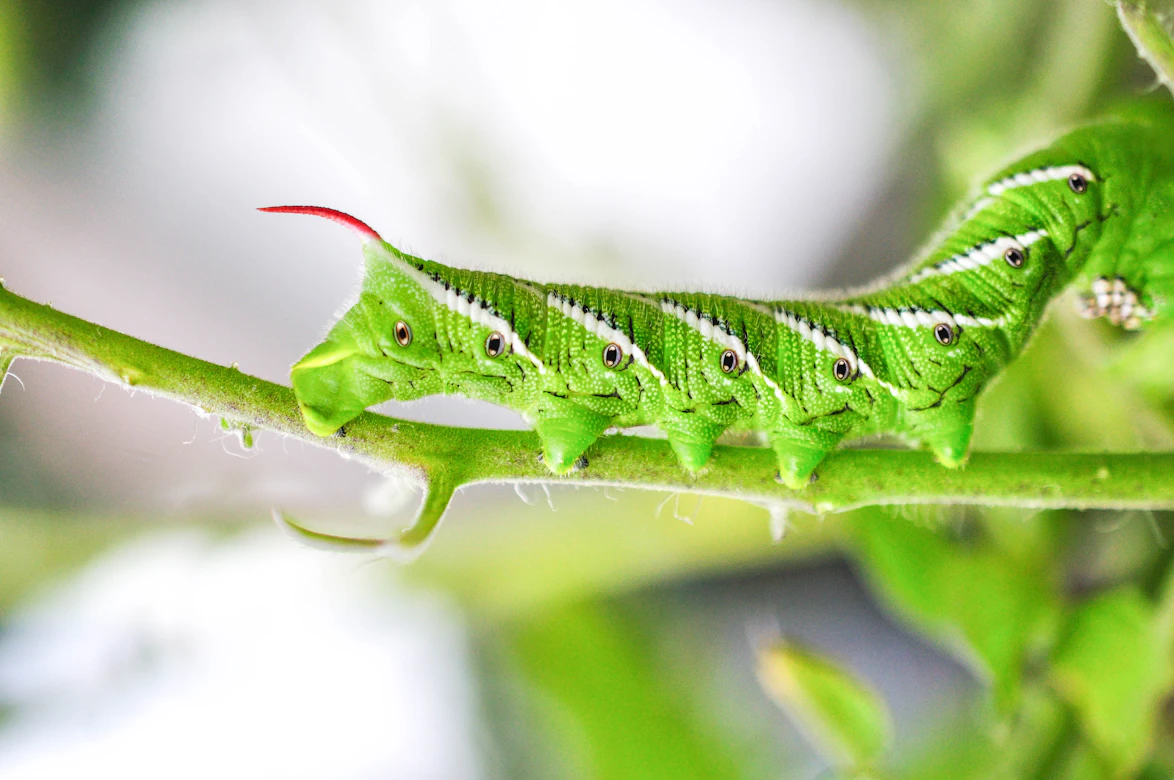
The tomato hornworm is extremely well camouflaged. What you'll notice first is the damage — tomato plants losing leaves rapidly — and large dark green droppings on the foliage below the feeding site. Find the droppings, look up on the plant above that spot, and you'll find your caterpillar. These things get large, up to four inches, bright green with white diagonal stripes and a rear horn that looks intimidating but is completely harmless. They don't sting and they don't bite.
What to do
Hand-pick and drop into soapy water. But if you find a hornworm covered in small white oval cocoons attached to its back —
leave it alone. Those are the cocoons of a parasitic braconid wasp called
Cotesia congregata. The wasp has already laid eggs inside the caterpillar, the larvae fed on it from the inside, and those cocoons are the next generation of wasps about to emerge. That caterpillar is already dying. Those wasps will go on to find more hornworms in your garden. It's free pest control. Leave it.
5. Slugs and Snails
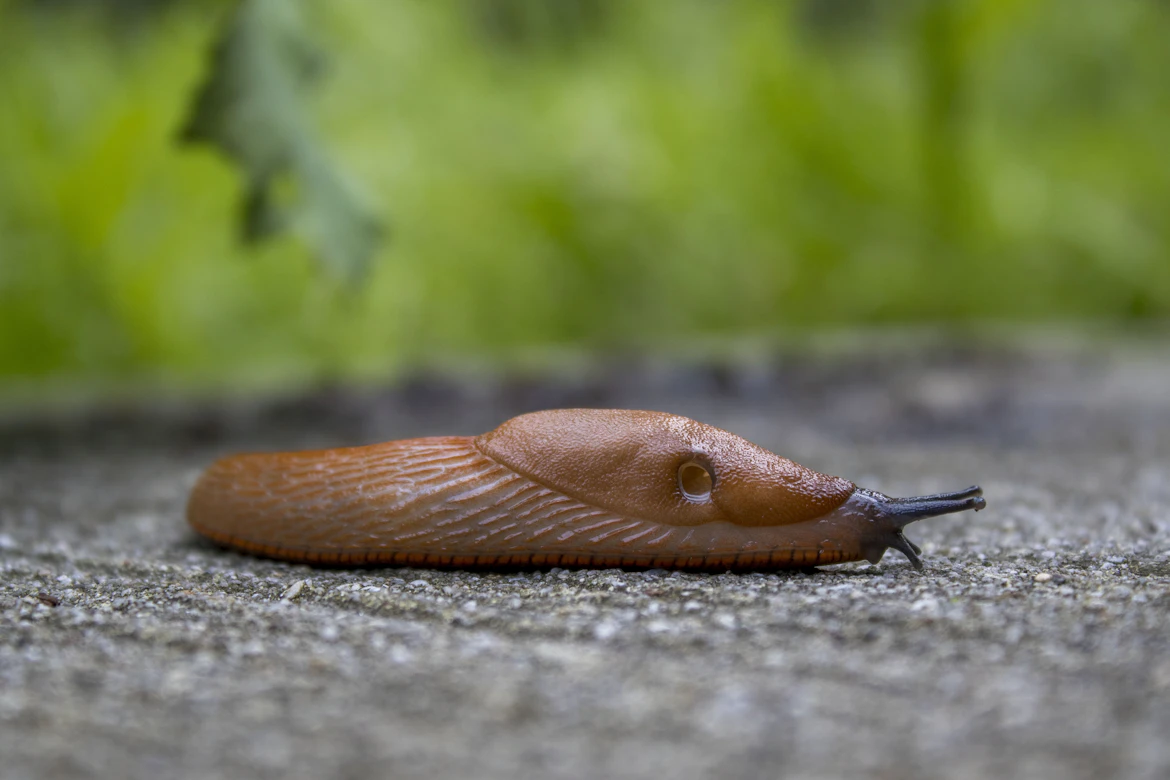
Slugs do most of their work at night. You'll find irregular, ragged holes in leaves with no frass and no insects — just damage and a silvery slime trail in the morning light.
That slime trail is your confirmation. Slugs love moisture, mulch, and shade, and cool wet New England springs are perfect conditions for them. They're especially hard on seedlings, lettuce, and low-growing plants.
What to do
Pull mulch back a few inches from the base of vulnerable plants to create a dry buffer. Water in the morning so the soil surface dries out by nightfall. The beer trap works well — sink a shallow container (a tuna can is perfect) so the rim is at ground level, fill halfway with cheap beer, and check it every morning. Slugs are attracted to the yeast and don't crawl back out. Copper tape around raised bed edges creates a reaction slugs don't like crossing. Diatomaceous earth sprinkled around plants creates a physical barrier — reapply after rain.
6. Earwigs
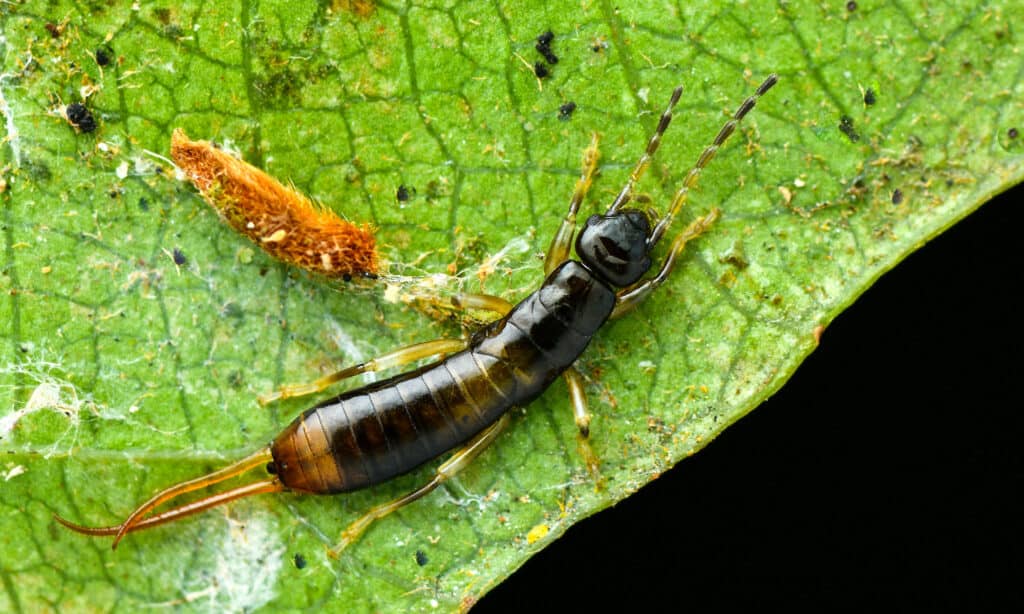
Earwigs are complicated. They eat aphids and other soft-bodied pests, which makes them beneficial — but they'll also feed on seedlings and tender plant tissue, which makes them a problem. The same fix applies as with slugs: pull mulch back from your stems and you remove the harborage where it matters most.
What to do
If earwigs are causing real damage, leave a rolled-up damp newspaper near affected plants overnight. Earwigs pile in looking for shelter and in the morning you drop the whole thing into soapy water. You're using their own behavior against them.
7. Aphids
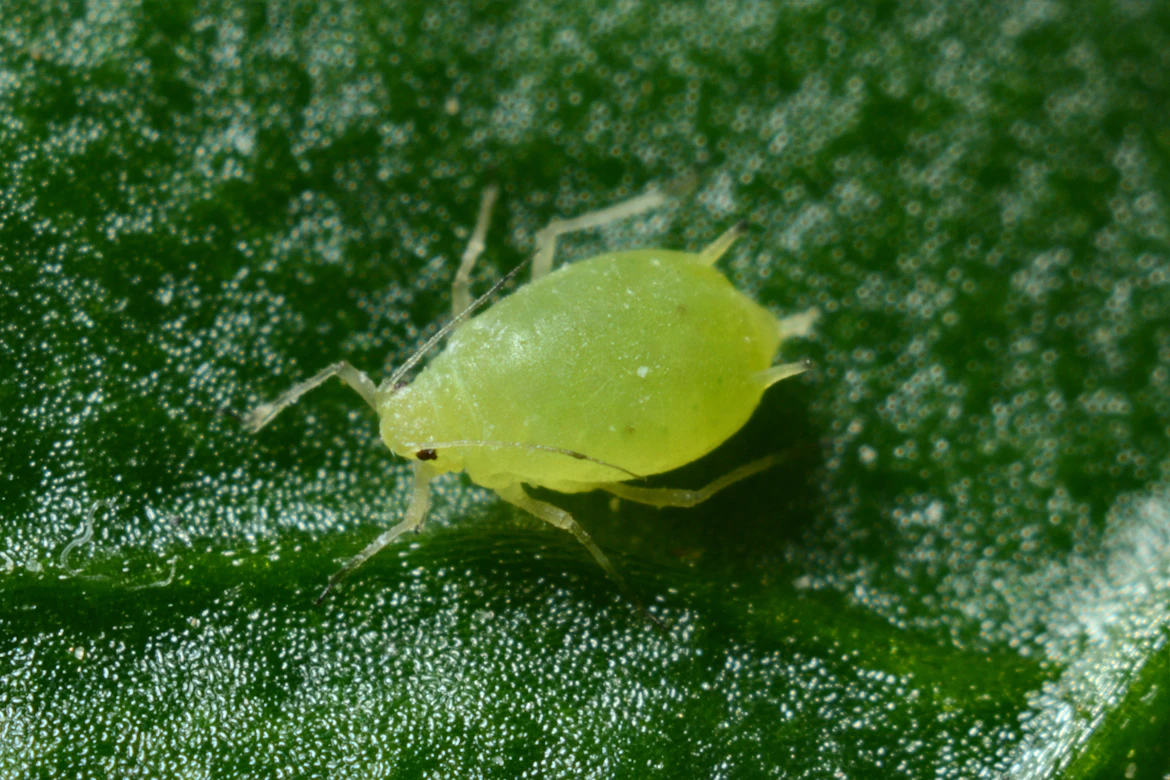
Aphids are roughly the size of a pinhead, soft-bodied, and come in green, black, yellow, and pale white depending on the species. Check the undersides of leaves and the tender tips of new growth — that's where they cluster. Damage includes curling, puckering, yellowing leaves and a sticky honeydew residue that develops black sooty mold and attracts ants.
If you've got ants climbing your plants, flip the leaves over and check for aphids underneath.
Aphids rarely kill a plant outright but can transmit viruses from plant to plant, so don't ignore them.
What to do
Start with a hard blast of water from your hose — do this a few days in a row and you can knock populations back significantly. Insecticidal soap spray is effective and low-impact on beneficials. You can make your own with a few drops of pure castile soap in a spray bottle of water, spraying thoroughly on the undersides of leaves. Neem oil for heavy infestations. And if you can hold off for a week, ladybugs and parasitic wasps will often find them on their own.
8. Colorado Potato Beetles
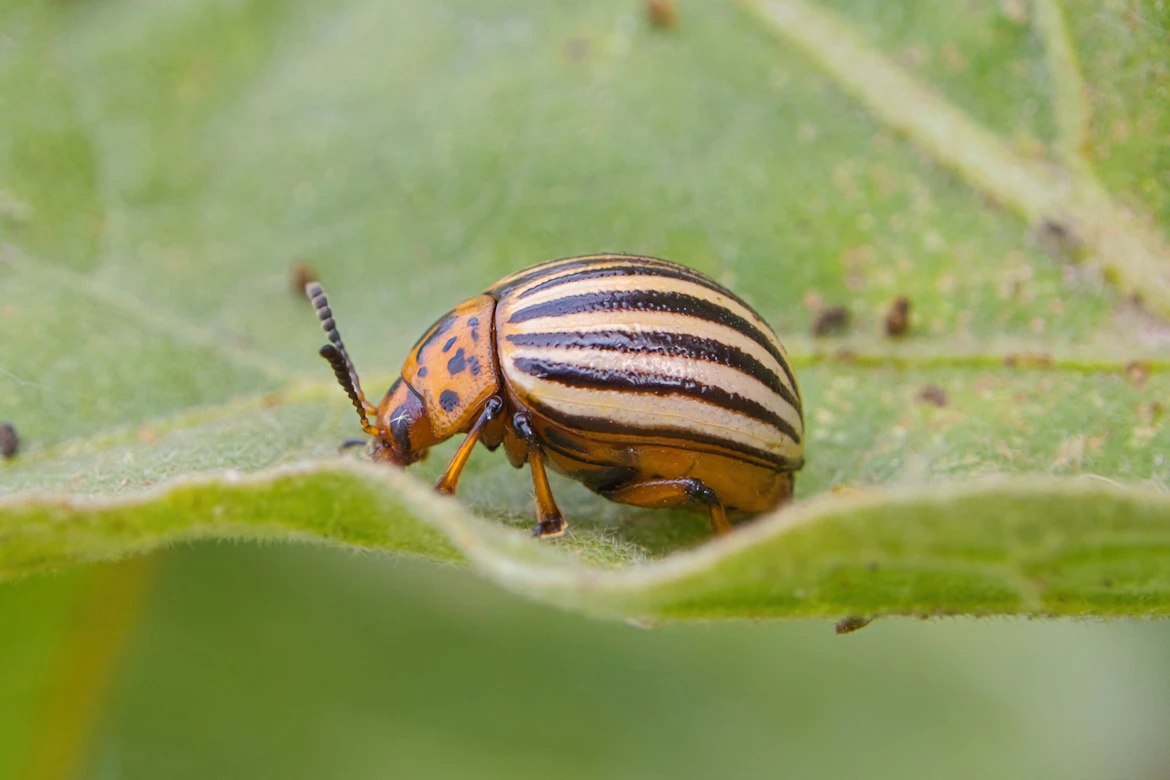
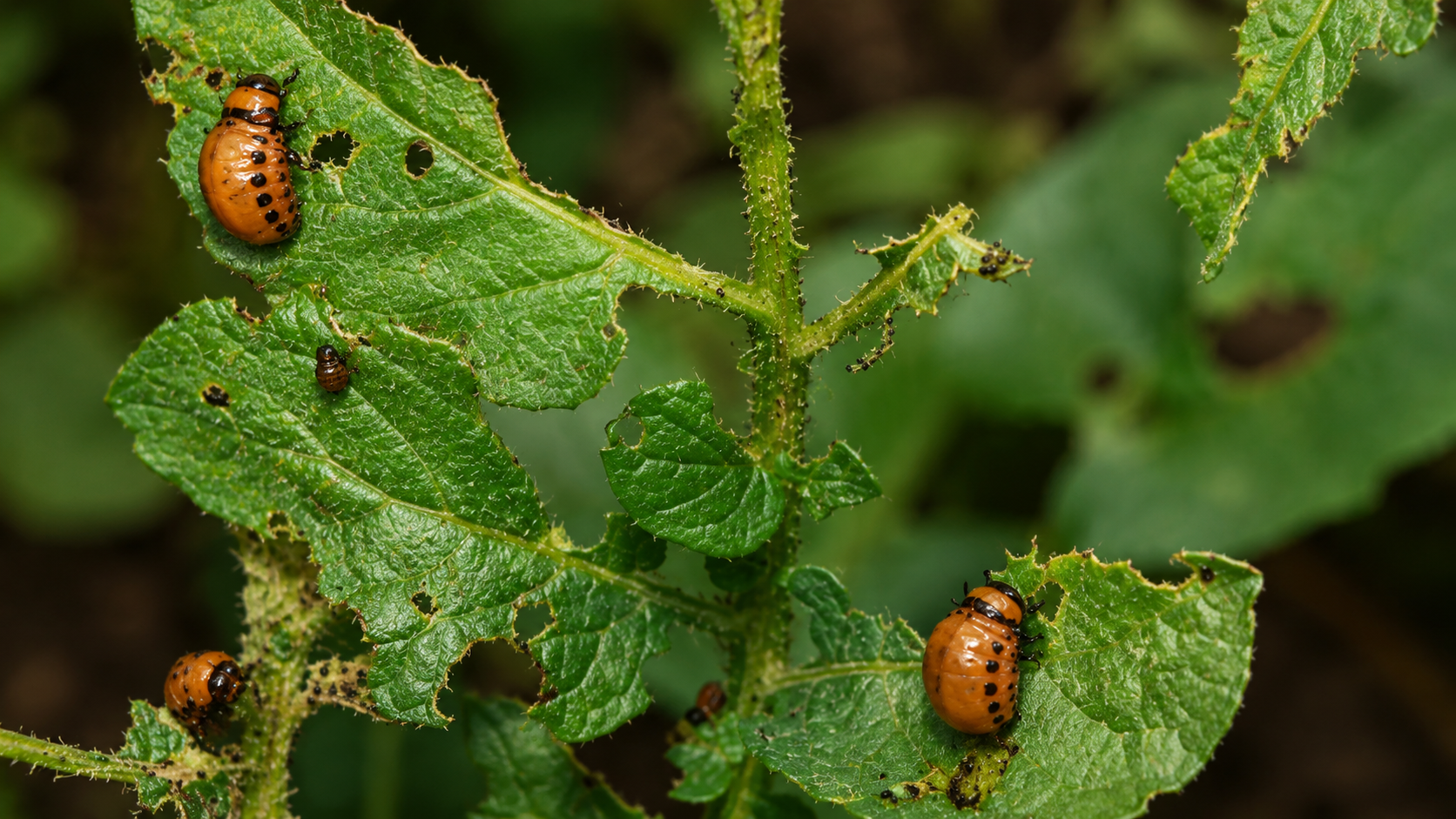
If you're growing anything in the nightshade family — potatoes, tomatoes, eggplant, peppers — you need to know the Colorado potato beetle. The adult is a rounded beetle with bright yellow and black stripes running lengthwise down its back. Very distinctive — once you've seen one, you won't confuse it with anything else. The larvae are reddish-orange, soft-bodied, humpbacked, and travel in groups on leaf undersides. The eggs are clusters of bright yellow-orange ovals, also on leaf undersides. The damage is rapid defoliation — a bad infestation can strip a plant to bare stems.
What to do
Hand-pick adults and larvae into soapy water and crush egg clusters when you find them. Check leaf undersides every few days. If you need a spray, Spinosad is effective against larvae and relatively low-impact on beneficial insects.
The key cultural practice is rotation — these beetles overwinter in the soil, so planting nightshades in the same spot every year welcomes them back. Move your tomatoes, peppers, and potatoes to a different bed each season.
9. Flea Beetles
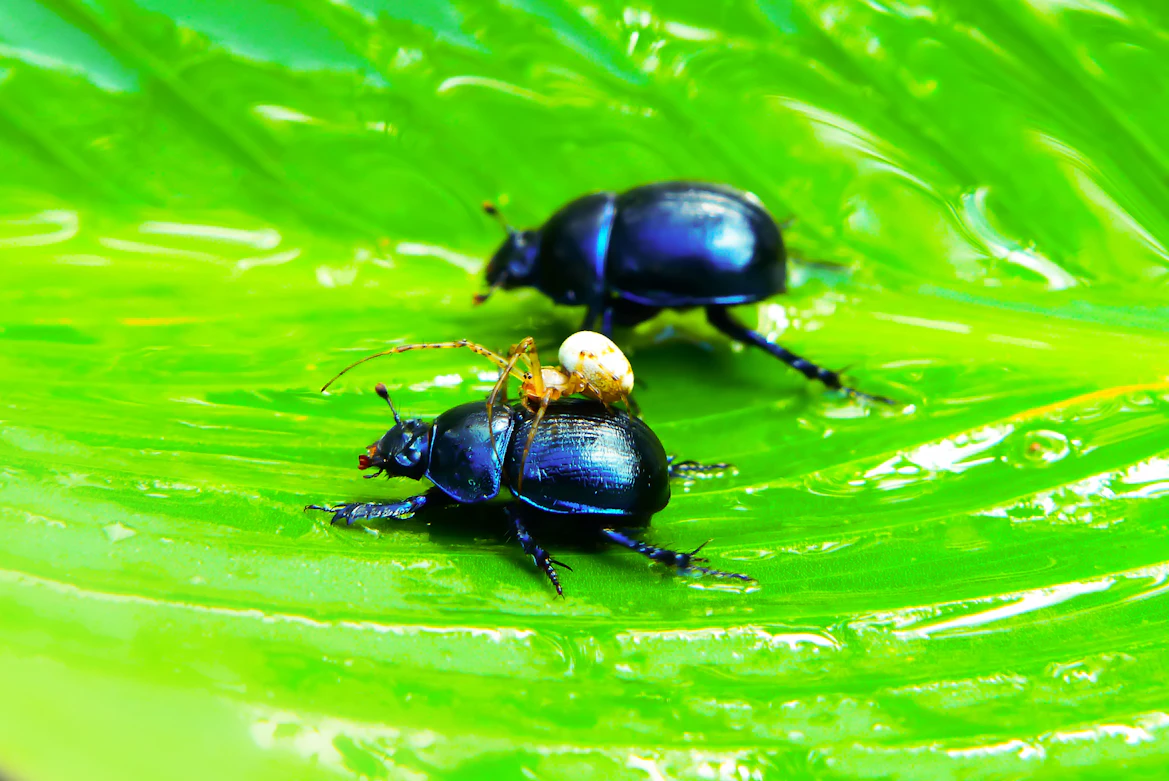
Flea beetles are tiny and fast. They jump when disturbed, which is where the name comes from. The damage pattern is very distinctive — leaves that look like they've been hit with fine buckshot, lots of small round holes punched right through. If you see that pattern, especially on eggplant, kale, arugula, or other brassicas, you're almost certainly looking at flea beetles.
Established plants can usually outgrow flea beetle damage. The time they're genuinely dangerous is when your plants are seedlings — young transplants can be killed.
What to do
Row covers at transplant time are your best defense during that early vulnerable window. Diatomaceous earth around the base of plants has some deterrent effect. Kaolin clay spray on the foliage creates a physical barrier the beetles don't like feeding through. Once plants are established and growing vigorously, flea beetles are more of an annoyance than a serious threat.
10. Cucumber Beetles and Bacterial Wilt
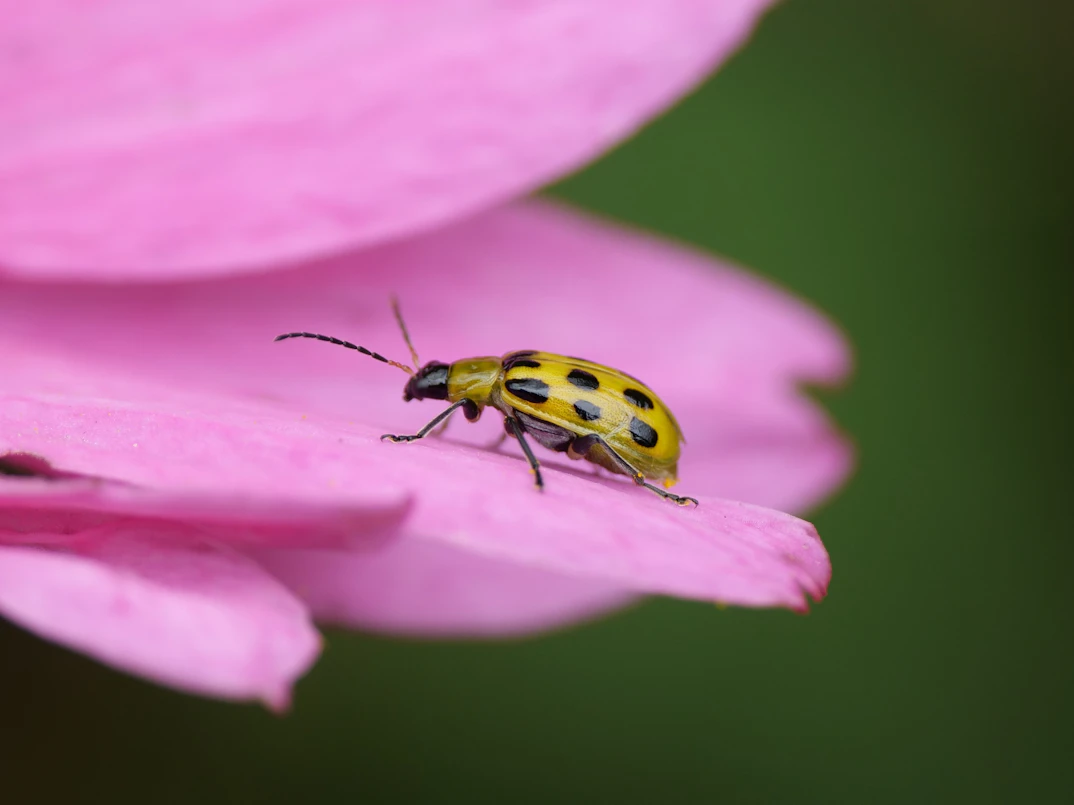
If you're growing cucumbers, squash, or melons, you need to know cucumber beetles. There are two species in New England: the striped cucumber beetle (three black stripes on a yellow-green background) and the spotted cucumber beetle (rows of black spots on a similar background). Both are about a quarter inch and fast-moving.
The direct feeding damage isn't the main concern.
The bigger problem is that cucumber beetles are a vector for bacterial wilt — a disease that can rapidly kill cucurbits and has no cure. You'll know bacterial wilt has set in when plants start wilting during the day and don't recover overnight. Here's a quick field test: cut a wilting stem, touch the two cut ends together for a few seconds, then slowly pull them apart. If you see thin thread-like strands stretching between the surfaces — that's bacterial wilt. The plant is done.
What to do
Row covers until flowering is your best tool. Yellow sticky traps help catch adults. Kaolin clay spray works as a deterrent. Once covers come off for pollination, keep monitoring and act fast if you see populations building.
Quick Damage Diagnostic Guide
Not sure what you're dealing with? Use this as a starting point:
- Clean holes in leaves — chewing insect: beetles, caterpillars, hornworms
- Ragged irregular holes overnight with a silvery slime trail — slugs or snails
- Brown papery skeleton leaves with veins intact — Japanese beetles
- Fine buckshot holes through leaves — flea beetles
- Stippled, silvery, or bronze-cast leaves — piercing/sucking insect, likely spider mites
- Sticky residue on leaves with ants present — aphids
- Plant wilts suddenly with no above-ground cause — squash vine borer at the stem base or cutworm below the soil line
- Seedlings cut off cleanly at soil level — cutworm: dig just below the surface next to the damage to find it
The Most Important Tool You Have
It isn't a spray. It's your eyes. Get out in the garden in the morning when insects are most active. Flip your leaves over. Look at your stems. Check the soil line. Pay attention to what the damage looks like before you treat anything — and a lot of the time, if you catch it early and you've got a healthy ecosystem going, the right response is to wait and let your beneficial insects handle it.
For deeper identification resources, visit the
UMass Extension IPM page at ag.umass.edu/integrated-pest-management/management-guides and the
UNH Extension IPM page at extension.unh.edu/agriculture-gardens/pest-disease-growing-tools/integrated-pest-management-ipm — both are New England specific and genuinely useful.
Comments
Loading comments…