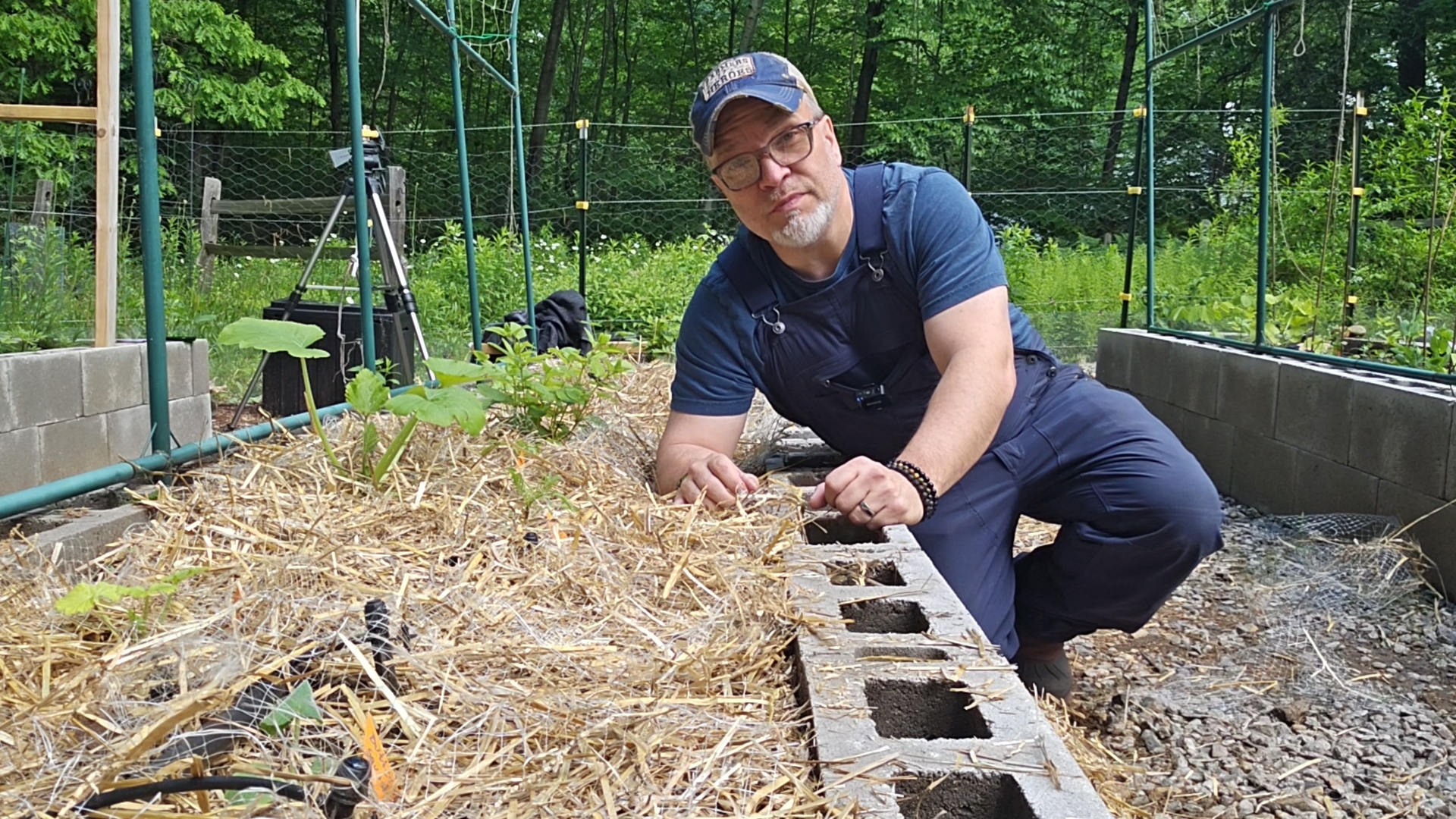
You planted your seedlings. You're watering them, feeding them, doing everything right. And right now, at the beginning of June here in New England, things look great. But summer is coming — and summer here doesn't ask permission.

When that midday sun shows up and the mercury starts climbing, the number one thing working against your garden isn't bugs. It isn't disease. It's evaporation. Your soil will lose moisture faster than you can put it back. And if you just try to water more to compensate, you're fighting a losing battle and wasting water.
The answer isn't more water. The answer is retaining the water you already have. And the way you do that is with mulch.
What Mulch Actually Does
A good layer of mulch on top of your soil acts like a lid. It slows evaporation, moderates soil temperature, and keeps your plants from having to work so hard just to survive the day. But not all mulches are created equal — especially for a vegetable garden.
The Four Common Options (And Their Problems)
Plastic Mulch
From a pure moisture and temperature retention standpoint, plastic works — and it works well. The problem is that it completely seals off your soil. If you want to add compost mid-season, test your pH, or treat for pests, you can't do it without pulling the plastic up or damaging it. Plastic also creates the perfect dark, warm, hidden environment for slugs, cutworms, and other insects that will happily move in underneath it and help themselves to your plants.
Landscape Cloth
Landscape cloth has the same access problems as plastic — you're still sealing off your soil. But it adds a problem of its own. Tiny weed seeds germinate right inside the fabric weave, and when that happens, pulling those weeds tears the cloth. Now you've got weeds and a ruined barrier.
Wood Mulch
Wood mulch is the classic. It looks great, suppresses weeds, and retains moisture well in ornamental beds. But in a vegetable garden — specifically where you're trying to produce fruit — it creates a nutrient problem. As wood breaks down, it consumes nitrogen from the soil as part of the decomposition process. During the fruiting stage, when tomatoes, peppers, and squash need a stable nitrogen balance, wood mulch actively works against you.
Cedar can reduce the insect issue since some insects dislike it, but it still decomposes and still steals nitrogen. Pine chips add another problem: pine is acidic, and as it breaks down it can drop your soil pH — and that's a whole separate issue to manage.
Rocks
Rocks don't decompose. They don't steal nitrogen. They retain heat and hold some moisture underneath them. But at the end of the season, when you want to turn your bed over and replant, you're moving rocks — year after year, with more accumulating over time. Your raised bed starts to fill up with them. And depending on the type of rock, limestone, marble, and certain river stones can leach calcium or other minerals into the soil in amounts you didn't plan for and can't easily control. Rocks are forever, and that's not always a good thing.
Why I Chose Straw
Straw checks almost every box. It retains moisture, moderates soil temperature, and suppresses weeds. Unlike wood, when straw breaks down it does not significantly affect your nitrogen levels. It biodegrades and becomes part of the soil — and over time it can actually improve drainage and soil structure. That's a mulch that's still working for you even after it's done being a mulch.
It's also easy to work with. Need to check under it for pests? You can. Need to add compost or an amendment mid-season? You can. You're not fighting plastic or cloth. You just pull a section back, do what you need to do, and fluff it back into place.
The Critical Warning About Farm Straw
Here's where a lot of gardeners make a costly mistake. If you walk into a farm supply store and grab a bale of wheat straw, it's most likely made for animal bedding. Farmers growing wheat straw use herbicides to keep their fields clean — and those herbicides can persist inside a bale and end up in your garden, where they will kill your vegetables.
This isn't a theory. It's a documented problem called herbicide carryover, and it has quietly destroyed a lot of gardens. The plants just fail to thrive, or die outright, and the cause isn't obvious unless you know to look for it. Symptoms show up as cupped, twisted new growth and stunted plants — easy to mistake for a pest or disease when the real cause is sitting right under the plant.
How to Actually Get Safe Straw
The fix isn't a different product — it's sourcing the straw correctly. A few ways to do that:
- Ask before you buy. Call the farm or garden center and ask directly whether the field was treated with a persistent broadleaf herbicide (aminopyralid and clopyralid are the two worst offenders — they survive composting and animal digestion and still cause damage). A straightforward "no" from a supplier who knows their own hay is worth more than any label.
- Look for certified organic straw. It costs more, but the herbicide question is answered before it ever gets to you.
- Buy from a garden center rather than a farm supply store when possible. Straw sold specifically as garden mulch is far less likely to come from a field managed for maximum herbicide use the way commodity animal-bedding straw often is.
- Run a quick bioassay if you're unsure. Soak a handful of the straw in water for a couple of days, then water a few bean or pea seedlings with it. If they twist, cup, or stunt within a week or two, don't use that batch anywhere near your vegetables.
One minor, harmless note: straw almost always carries a few stray wheat seeds, so don't be surprised by the occasional wheat sprout coming up near your plants. They're shallow-rooted and easy to pull — not a real problem, just a cosmetic one.
How to Apply It
Lay straw loosely, about 3 to 4 inches deep, around the base of each plant — leaving a small gap right at the stem so it isn't sitting against the plant itself and inviting rot. Fluff it as you go rather than compacting it down; loose straw traps more air and insulates better than a packed layer. It settles over the season, so plan to top it off partway through summer as it compresses and starts to break down.
Two More Benefits Worth Mentioning
For squash, zucchini, cucumbers — anything where the fruit rests on the ground — straw acts as a clean, dry cushion. The fruit isn't sitting in soil or in contact with surface moisture, insects, or anything that might cause it to rot or mold. It stays clean, dry, and healthier.
And during heavy rain or hard watering, straw absorbs the impact of splashing. Soil splash carries pathogens and spreads disease. A layer of straw between the soil and your plant eliminates most of that — protecting the roots, the fruit, the stem, and the soil moisture, all with one material that costs a few dollars and biodegrades into your soil.
The Plan This Season
Drip irrigation running in the morning before the heat kicks in. Straw mulch doing the work in between. If you've got a different mulch approach that works in your New England garden, drop it in the comments on the video — I want to hear about it.
Watch the Full Episode
See the full breakdown on YouTube, including a closer look at how to source and lay straw mulch the right way:
Best Mulch for Vegetable Gardens — New England Harvester
Whatever you're growing this season — grow it well. 🌱
Comments
Loading comments…